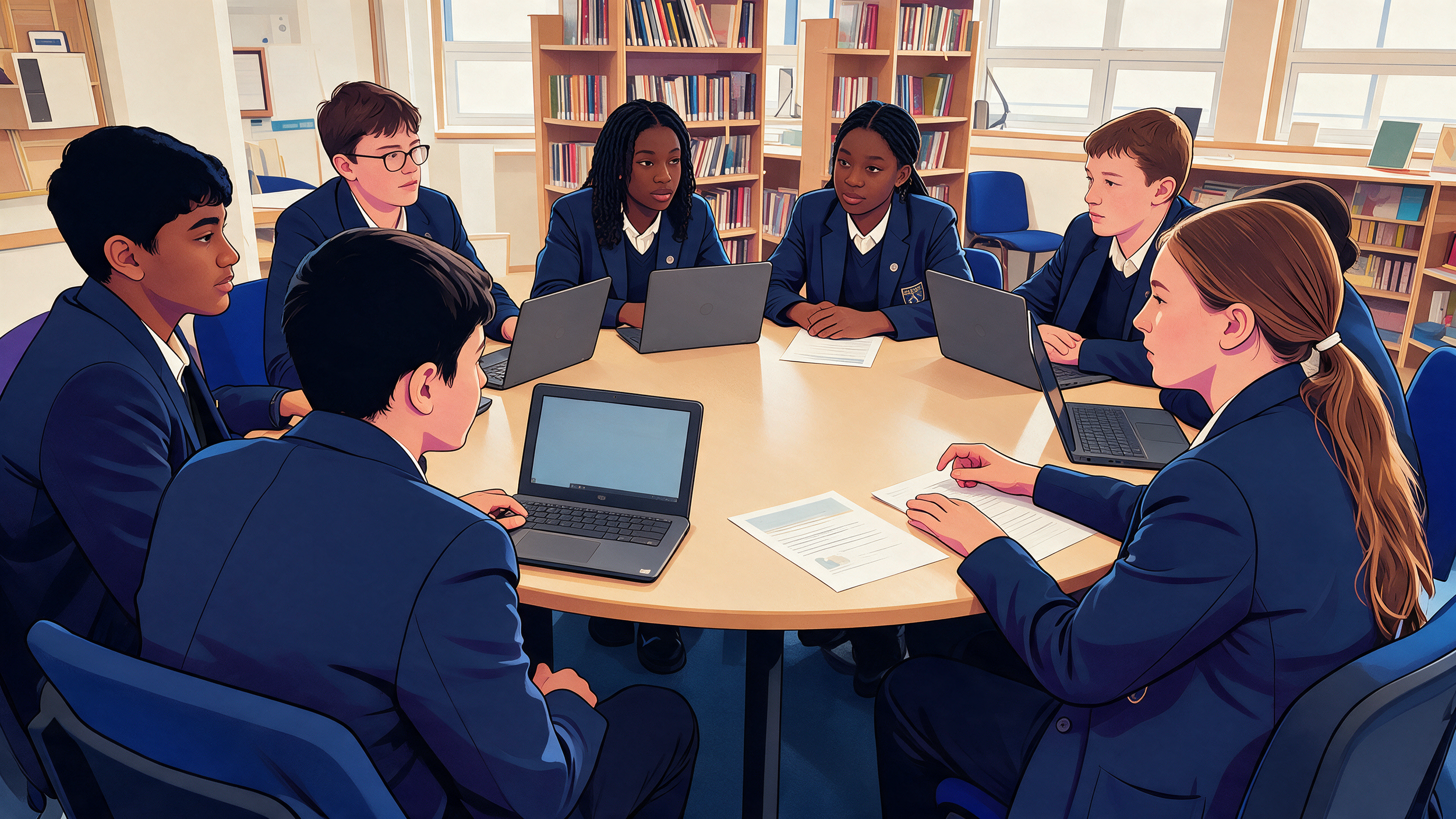
The Youth Council In The Room
Debating The New Climate Resilience Framework
The Climate Resilience Council Is In Open Session
The European Commission is preparing to adopt its new Climate Resilience Framework this autumn. But policy shouldn't be written for young people without hearing from them. Ahead of key debates scheduled for late October, there is a crucial window for classrooms to move beyond passive learning and exercise real democratic agency.
To bridge that gap, I’ve created The Climate Resilience Council a turnkey 60-minute classroom deliberation tool designed for secondary and upper-level students:
Step 1: Examine the expected structure of the EU’s 5-pillar framework, from risk ownership to resilience funding.
Step 2: Debate 6 core policy trade-offs (including whether adaptation rules should be legally binding and how youth needs are represented).
Step 3: Position & Submit draft position papers and pool classroom findings directly into the EU’s official Have Your Say feedback channel.
Young people will live with these climate risks the longest, yet youth and education currently lack dedicated representation in the proposed framework. This mini-curriculum gives educators an off-the-shelf way to build climate literacy, systems thinking, and active civic participation in a single lesson.
Get Involved: Run the session, capture your Youth Council's verdict, and make sure your students' voices reach decision-makers before adoption.
 Read, Debate, Decide

The Climate Resilience Council
The European Commission is preparing a new plan to help Europe get ready for floods, heatwaves, wildfires and drought. Your class becomes a Youth Council. You learn the five parts of the plan, test ideas in the Risk Lab, debate six hard choices and send your position to the people who represent you.
Built for ages 11 to 18 from the Commission's consultation, the European Climate Risk Assessment and independent expert advice. Checked against the sources on 30 September 2026.
Set Up Your Council
Two choices tailor the tool. Your age group changes the wording, the discussion questions and how much detail you see. The way you are working suggests a first move.
Which Age Group Is Taking Part?
How Are You Working?
How The Council Works
- 1Read The Five PartsLearn what the plan would do, one part at a time, and give each part a verdict.
- 2Try The Risk LabBuild a climate risk from its three pieces, then spot the fixes that backfire.
- 3Check The EvidenceGuess what people told the EU, then see the real answers.
- 4Debate Six MotionsHear both sides, count the votes and record what the council decided.
- 5Decide And SendYour verdicts and votes build your council position and survey, ready to print and send.
Key Words
Six ideas carry the whole plan. Open each one, and tick it when you can explain it to someone else.
If Climate News Feels Worrying
Many people feel uneasy about climate change. This tool is about what people can do: plan ahead, protect each other and make fair choices. If something here worries you, talk to your teacher or someone you trust.
For Teachers
The Hour
0 to 10: brief the Five Parts. 10 to 20: groups set verdicts, or run the Risk Lab. 20 to 45: debate the six motions. 45 to 60: build the position, read it out and complete the survey.
What Students Learn
To explain the plan's five parts, use risk ownership, residual risk, reference scenario, resilience by design and maladaptation, weigh a trade-off with reasons, and reach a shared position.
Curriculum Links
Geography, Citizenship and Science. IB MYP Individuals And Societies, DP Global Politics and Environmental Systems And Societies. GreenComp, especially embracing complexity and acting for sustainability.
About this tool. A teaching aid from 169to1, not a statement of EU policy. The framework it describes has not yet been adopted. Part summaries, discussion questions, the Risk Lab, motions and competence and SDG mapping are 169to1's own editorial layer. Confirm any detail against the sources before relying on it.
- European Commission, European Climate Resilience And Risk Management Integrated Framework
- Have Your Say: the initiative page and consultation
- European Commission, Factual Summary Report, Stakeholder Consultation, 2026 (Ares(2026)5038066)
- European Environment Agency, European Climate Risk Assessment, 2024
- Tanguy and Torres Gunfaus, From Increasing Risks To Coordinated Adaptation: What Role For The EU Resilience Framework?, IDDRI Policy Brief 01/26, February 2026
- European Geosciences Union, Climate Hazard And Risk Task Force, response to the open public consultation, 2026
- European Scientific Advisory Board On Climate Change, Strengthening Resilience To Climate Change, 17 February 2026
- European Commission, Call For Evidence, European Climate Resilience And Risk Management Initiative, July 2025 (Ares(2025)6039098)
- European Parliament Legislative Train: EU framework for climate resilience
Your council details and answers are saved only in this browser on this device.
© 2026 169to1®, Hudson Consultancy Online
General Resources
5 Part Prep Reader
Student’s Notes and Checklist
Teacher’s Notes and Checklist
Youth Climate Resilience Survey
Risk Lab Cards