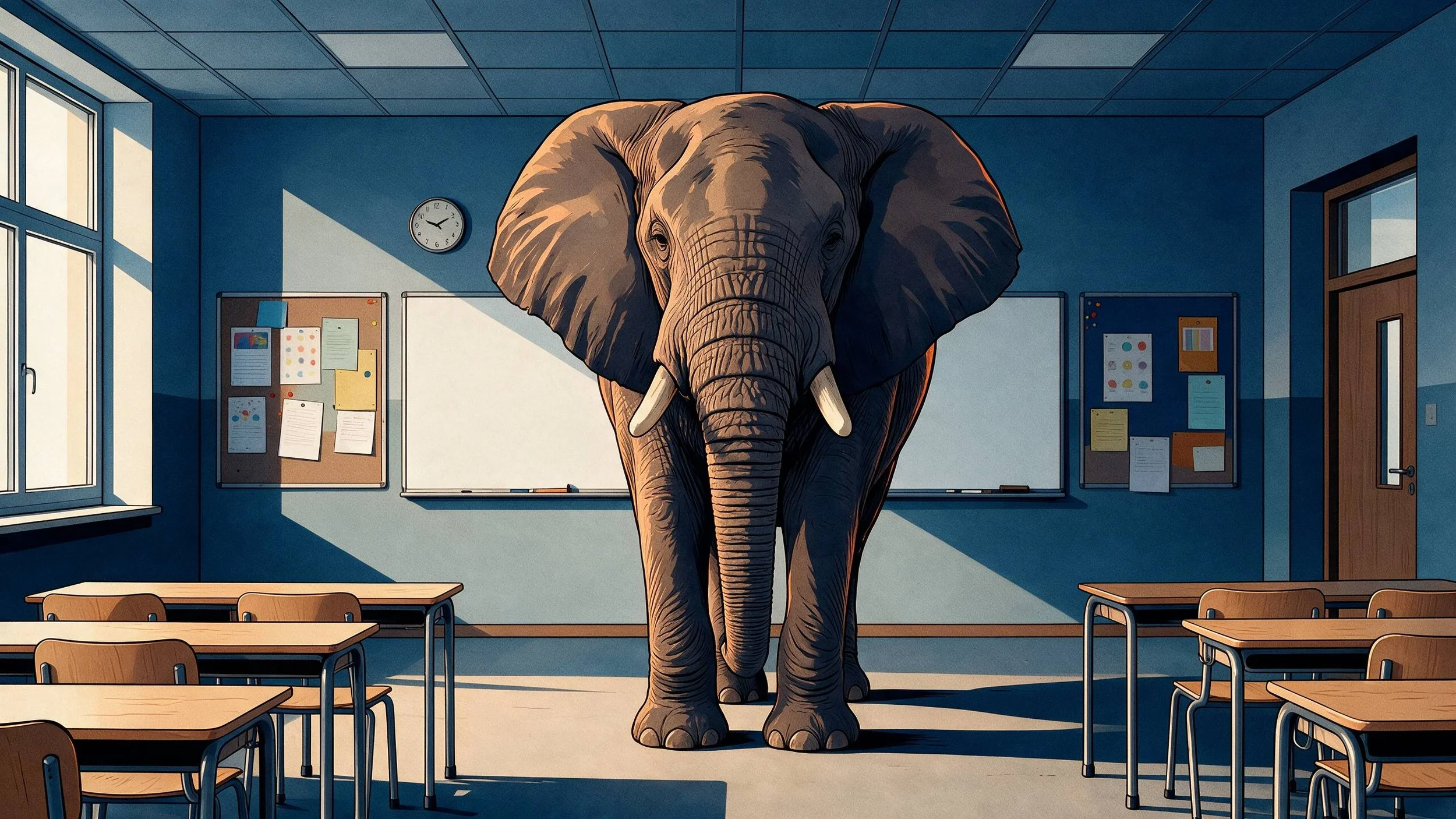
The Algorithm In The Room

The UNESCO Report in Plain English

The Algorithm In The Room Is Open

The new report "The algorithm in the room: Seeing and confronting the implications of AI for the future of education", released in September, is a major policy and research report published by UNESCO.

It is designed to address the hidden, ignored, or uncomfortable truths; the "elephants in the room", about how Artificial Intelligence (AI) is rapidly changing schools, teaching, and human learning.

Wouldn’t it be great to understand these 26 think pieces in layman’s terms? Well, now you can, with our Algorithm Room.

169to1®Read · Locate · Act

The Algorithm in the Room

A plain-English reader's map of UNESCO's 26 think pieces on AI and the future of education: the six questions they're built around, the SDG targets each one speaks to, and the three horizons for acting. Pick a question, filter by how each think piece reads the future, or start with the horizons.

Distilled from the report of 9 September 2026 · reviewed 10 September 2026.
26Think pieces
6Questions
169SDG targets
3Horizons ↓
NoteThese are the authors' views, not UNESCO's. The volume is a collection of 26 independent think pieces; each position belongs to its contributor. The reading and SDG mapping below are 169to1's editorial aids for finding your way around, not labels or a crosswalk from the report.
Which question?
How does it read the future?

Twenty-six short essays, organised around six urgent questions. Each card gives the author's thesis, a plain-English distillation, and the SDG targets 169to1 reads it as bearing on. Tap any card for the full read.

How each think piece reads the future: 169to1's editorial judgement, not a label from the report
Constructive Path. Puts forward a way AI, or a considered response to it, can serve education's aims.
In Tension. Weighs real promise against real risk, or stays diagnostic, and sets conditions.
Cautionary. Its centre of gravity is a risk AI poses to education's human purposes.

Each open card shows a one-line "why this reading". These are aids for navigating an essay collection; reasonable readers will place some think pieces differently.

All 26 pieces

The Algorithm in the Room is a 169to1 reader's aid: an independent, plain-English map of a UNESCO publication. It is a guide to the report, not a substitute for it, and it does not reproduce it. It is not legal, policy or investment advice.

Read the full report: The algorithm in the room: Seeing and confronting the implications of AI for the future of education (UNESCO, Paris, 2026). ISBN 978-92-3-100897-9. DOI 10.54675/PMRO5023.

Source and licence. This work is based on The algorithm in the room, © UNESCO 2026, made available in Open Access under the Attribution-ShareAlike 3.0 IGO licence (CC BY-SA 3.0 IGO). This reader's aid is an adaptation of that work: the views and opinions expressed in it are the sole responsibility of 169to1 and are not endorsed by UNESCO. In keeping with the ShareAlike terms, The Algorithm Room is itself released under the same licence, CC BY-SA 3.0 IGO.

The 26 think pieces express their authors' own views, not those of UNESCO or 169to1. Distillations paraphrase each piece; quoted phrases are the authors' own. The reading (constructive / in tension / cautionary) and the SDG target mapping are 169to1's editorial aids, using its own plain-English target wording, to help readers locate think pieces; neither is a label or crosswalk from UNESCO. The three horizons are paraphrased from the report's conclusion (Figure 1). 169to1 is independent and has no UN affiliation. Content reviewed 10 September 2026.

This is about measuring the room and recognising your impact.

If you’re working inside the 169to1® eco-system, transparency and relevance is key to sustainable action.

Select, Classify and Prove… Simple.