Misinformation Outside The Box
Understanding Where Climate Misinformation Starts

Become Detectives To Unravel FLICC
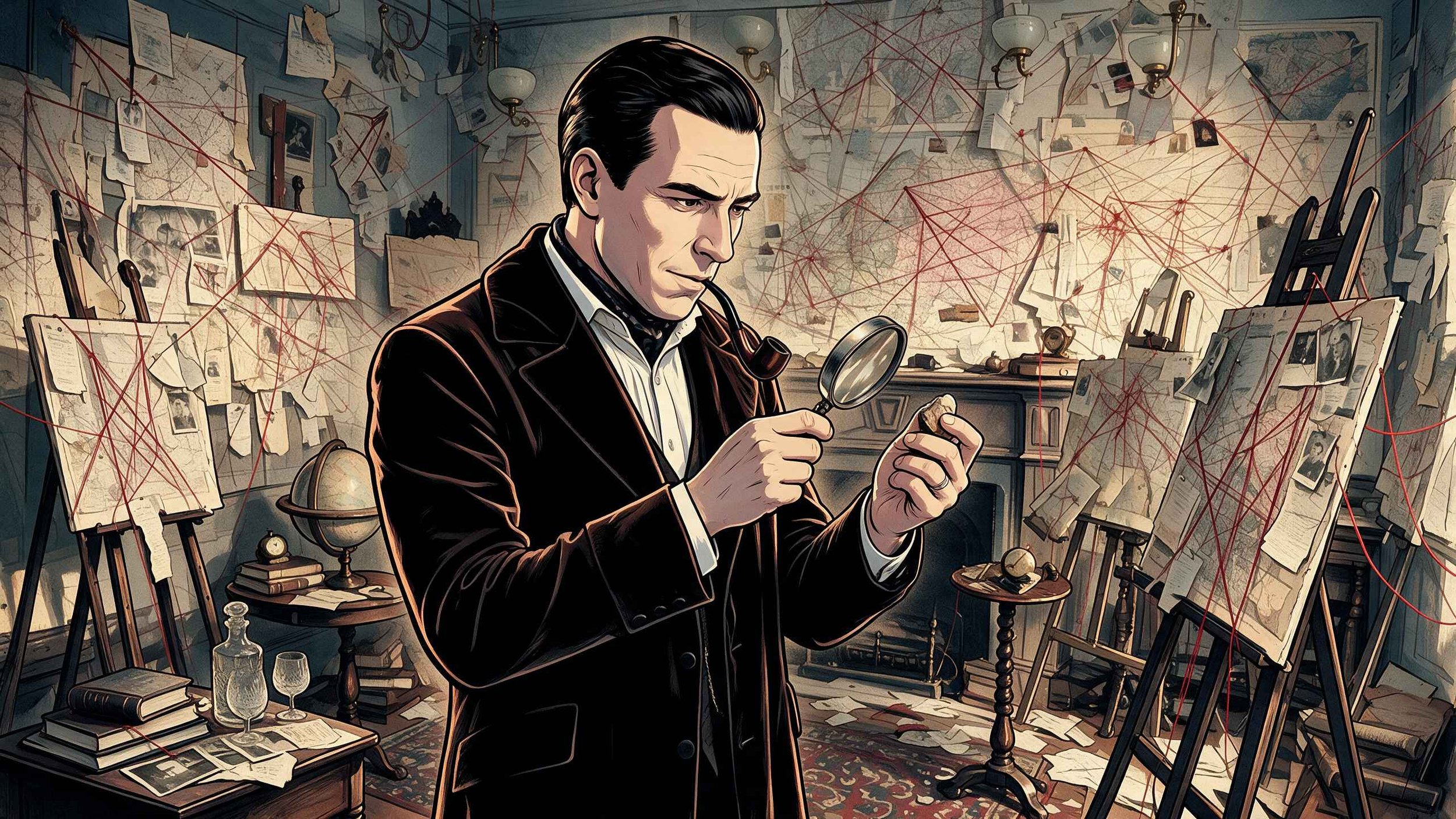
Misinformation Outside The Box is the third tool in the 169to1 Outside The Box series. Learners become Climate Misinformation Detectives, with Sherlock Holmes as their mentor, and investigate five real cases of climate misinformation: a road sign in Oxford that never existed, the blackout across Spain and Portugal, a promise to make rain over Istanbul, a committee of five in Washington, and a demand for perfect proof after the Valencia floods. Each case runs over three 60-minute lessons for ages 9 to 10, 11 to 13 and 14 to 16. Detectives observe before they judge, test the evidence at five stations, rule out three of four verdicts, and present their findings to Inspector Lestrade. A week later, they measure whether their report changed what people believe.
The tool teaches the tricks behind misleading claims as well as the facts of each case, so learners can spot the same trick on a topic they have never met. It brings together John Cook’s FLICC techniques, Mike Caulfield’s SIFT method, Holmes’s own words from the Conan Doyle stories, the Communication Pulse checks and the GreenComp framework, with every case built on verified sources. Teachers get teacher and student sheets for every lesson, evidence and station cards, a one-page Run This Case guide, optional homework, and an extended route for classes that want more time.
 Observe · Evidence · Thread

Misinformation Outside The Box
The third tool in the Outside The Box series. Learners become Climate Misinformation Detectives and investigate real cases of climate misinformation, with Sherlock Holmes as their mentor: a road sign in Oxford that never existed, a blackout across Spain and Portugal, a promise to make rain over Istanbul, a committee of five in Washington, and a demand for perfect proof after the Valencia floods. Every case has three 60-minute lessons, written for ages 9 to 10, 11 to 13 and 14 to 16, from the teacher’s side and the student’s side.
Built on the Sherlock’s Apprentice engine and seven habits, FLICC (Cook, 2020), SIFT (Caulfield), GreenComp (JRC, 2022) and the eleven checks of the Communication Pulse. Case evidence traces to named sources, checked on 20 October 2026. Holmes’s words are checked against the Conan Doyle stories.

Your Mentor
“You see, but you do not observe.”
Sherlock Holmes · A Scandal In Bohemia
Observe, Evidence, Thread. A clue is worth nothing until you can say why it matters.
The Casebook
Open a case for Holmes’s telegram, the Case Brief, Lestrade’s Statements, Moriarty’s calling card, the five discipline stations, the comparison evidence and the three lessons for your age band.
Every case has the same team, and every character has one job. Holmes asks; Watson helps; Lestrade is evidence to be unravelled; Mrs Hudson moves the clock; Wiggins and his Irregulars hold the missing facts; Moriarty is never seen.
Detective Jobs In Lesson 2
Every student is a detective. Jobs rotate between cases so every detective tries each one.
No student ever plays Holmes, Watson, Lestrade, Mrs Hudson, Wiggins or Moriarty. The characters reach the detectives through cards, the Case Brief and the teacher.
Getting Stuck
Help comes in rungs, in this order. No penalty at any rung: the trail goes cold, nobody loses.
The Engine
Observe → Evidence → Thread
One rule: a clue is worth nothing until you can say why it matters.
Holmes’s Seven Habits From Sherlock’s Apprentice
The way detectives think. Holmes’s words on each card follow the age band you choose.
The Five Disciplines From Sherlock’s Apprentice
Every case is built from the same five kinds of challenge, run as stations in Lesson 2. The story changes; the slots do not.

The Unseen Instigator
Moriarty’s Playbook
Five tricks that misleading claims about climate use again and again, known as FLICC (John Cook, 2020). Moriarty’s calling card in each case points to one of them. In Lesson 1, detectives choose a lead suspect; in Lesson 2, they prove it.
SIFT · Follow The Thread Caulfield
Four moves for checking a claim, run by the Source Checkers. Ages 9 to 10 use Stop and Trace. Leaving the page to see what others say about a source is called lateral reading; a 2022 study across a school district found students taught it grew significantly in their ability to judge online content.
The Four Verdicts
Detectives rule out three, with a reason for each. Not every case ends in False.
The Mentor’s Words From The Canon
The Toolkit card, the Case Board and a blank Case File for any claim.
Solving a case is half the job. The eleven checks from the Communication Pulse shape how detectives explain it: nine ingredients from Planetary Communications (Stockholm Resilience Centre, 2026), grouped as Reliable, Relevant and Relatable, plus two 169to1 checks, Listen First and Honest About Costs. FLICC and SIFT are the tools detectives use for Be Factful. Open a check to see what it means, its levels for your age band, and every lesson that uses it.
GreenComp has 12 competences in four areas. Critical Thinking (2.2) leads every case. The five disciplines and seven habits carry the other competences, so every case reaches all four GreenComp areas. Statements marked with a case tag are the ones that case’s lessons build. Open a competence for the full picture.
GreenComp: The European sustainability competence framework (Bianchi, Pisiotis and Cabrera Giraldez; JRC, 2022), rewritten in plain British English and reused under CC BY 4.0. The links between statements and lessons are 169to1’s lesson design.
All 169 SDG targets, each with the GreenComp competence that most directly develops it and the cases in this tool that work on it. Open a target for its education snapshot.
An Editorial Mapping, Not An Official One. GreenComp does not link its competences to SDG targets. The lead competence for each target comes from the GreenComp Pulse, and the case links are 169to1’s suggestions, so teachers can test them and change them.
Did It Work?
Lesson 3 of every case asks detectives to measure whether their Detective’s Report changed what people believe, and to report what they found, including what did not work. Fill this in as a class or group, then copy or print the report.
1What We Set Out To Change
One change you wanted, and how you would count it. The case’s suggested measure appears below when you choose a case.
2Before And After
Ask the same question, the same way, to the same people, before and after your report.
3What The Audience Did
Choose all that apply, then describe it.
4How We Know
Evidence someone else could check.
5Our Verdict
6Claims Check
7Our Report
Built from your answers. Copy it into a newsletter, a report to school leaders or a presentation.
Every fact in the cases traces to a named source. This list shows each source with its organisation, title, date and link, the cases that use it, and what it supports. Frameworks and the canon come first, then the case and comparison evidence. All links were checked on 20 October 2026.
How To Read This List. Reported means the fact comes from a news or summary report of the original, which is named in the entry. Historical marks a publication from before 2020, such as the Conan Doyle stories, used as history or literature, not as current data.
Your Lesson Pack
Every lesson has a teacher’s sheet and a student’s sheet, one A4 page each, written for the age band you choose. Each case also has a Case Overview, a Teacher Key, a Case Brief to read aloud, evidence cards and station cards.
Your pack is empty. Use Add To Pack on any case, or add them all.
Printing opens the sheets on their own page. Use the Print button at the top, or on a phone use Share and then Print, to save a PDF. Each sheet is fixed to one A4 page.
Guides, Toolkit And Records
Ready to print, in the same A4 format as the lesson sheets.
The Case File
One page: a blank case file for any claim, with Holmes’s habits, FLICC, SIFT, the four verdicts and Holmes’s questions.
The Case Board
One page to enlarge for the wall: clues, Threads, Lestrade’s Statements, the calling card and the verdict.
The Detective’s Toolkit
Four pages: the engine and seven habits; the five disciplines and the team; Moriarty’s Playbook; SIFT, the verdicts, getting stuck and Norbury.
Teacher’s Guide
Two pages: how a case runs, the team, the age bands, Threads, Holmes’s words by age, and how to request a case.
Case Map
One page: every case and lesson at a glance, with comparisons, habits, checks and SDG targets.
Source List
Every source used in the cases, with dates, links and the cases that rely on them.
Checks Rubric And Score Sheet, Ages 11 To 16
Three pages: all eleven checks at four levels, for scoring each Detective’s Report.
Checks Poster, Ages 9 To 10
One page: eleven simple questions with three steps and colour-in bars.
Did It Work? Record Sheet
One page for classes without devices: before and after, evidence, a verdict and a claims check.