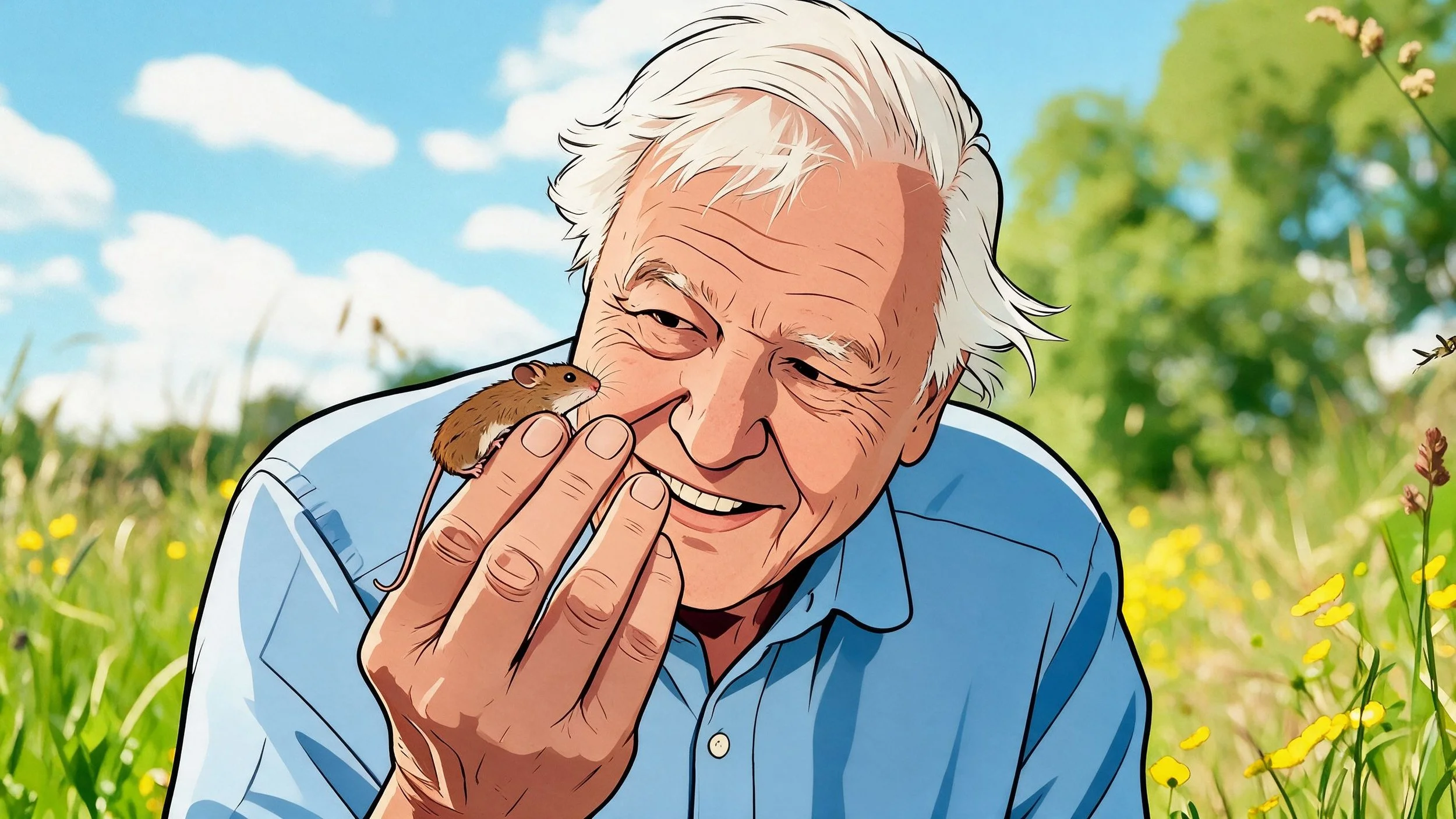
In 2020, at the age of 93, Sir David Attenborough gave what he called his witness statement: the decline of the living world across his lifetime, what science predicts next, and how we can still put it right. This unofficial lesson companion turns his film into lesson activities for students aged 11 to 16 and for adult groups.
It follows the film in four levers, with 17 cases and 34 classroom, field and community activities. The film's on-screen chapter cards and every figure it gives sit beside the latest published data, so learners can see what has changed since 2020 and why. Material from the book which accompanies the film is labelled separately. Every case is mapped to GreenComp and the 169 SDG targets.
The film streams on Netflix. Check your school's licence before showing it to a class.
A Life On Our Planet Companion
Select, Classify, Prove
A Life On Our Planet Companion
David Attenborough: A Life on Our Planet is an 83-minute documentary in which Attenborough, then 93, gives what he calls his witness statement: the decline of the living world across his lifetime, what science predicts next, and his vision for rewilding the world. It streams on Netflix. This tool turns the film into lessons for students aged 11 to 16 and adult groups: what the film shows, its 2020 figures against the latest data, and a classroom and a field activity for every case.
Built from the film itself (Silverback Films and WWF, 2020), with material from the companion book labelled separately, and every case mapped to GreenComp (JRC, 2022) and to the 169 SDG targets. Film details checked against Netflix and Common Sense Media, and latest figures checked against named sources, on 15 October 2026.
4Levers
0Film Cases
0Activities
0SDG Targets
Read The LabelsTreat the film as evidence, not as a textbook. Items marked From The Film summarise what the film shows and says. From The Book marks material from the companion book. Figure To Test marks a number the film reports, for students to check. 169to1 Lesson Design marks our activities and questions. 169to1 Mapping marks our own links to GreenComp and the SDGs.
Set Up For Your Class
Two choices tailor the tool. Your choice of learners changes the discussion questions and activity adaptations throughout. Adult Learners covers teachers, parents, colleagues and community groups, and matches page 002 of every lesson sheet. Your role suggests a first move.
Which Learners Will Take Part?
What Is Your Role?
What This Tool Brings Together
The Film
David Attenborough: A Life on Our Planet, directed by Alastair Fothergill, Jonnie Hughes and Keith Scholey and made by Silverback Films with WWF. It opened in cinemas on 28 September 2020 and on Netflix on 4 October 2020. It runs 83 minutes and is rated PG.
Silverback Films and WWF, 2020. Companion book: A Life on Our Planet: My Witness Statement and a Vision for the Future (Witness Books, 2020).
GreenComp
The European sustainability competence framework: 12 competences in four areas. It names what learners should develop but not how to teach it. The film supplies real cases to practise on.
Bianchi, Pisiotis and Cabrera Giraldez, JRC, 2022.
The 169 SDG Targets
Every case is linked to the SDG targets it touches, and all 169 targets open an education snapshot with a question, a five-step activity and evidence of learning.
169to1 mapping. 169to1 is independent and has no UN affiliation.
Why GreenComp And The SDGs
The film's levers do not sit in separate boxes. Each draws on more than one GreenComp area, and each case touches several SDG targets, most often under Life On Land, Life Below Water, Climate Action and Affordable And Clean Energy. Tagging every case lets film work sit inside existing science, geography and citizenship planning. Select any chip to see the links.
Teacher's And Student's Notes
Two-page guides for running the tool with a class. Both are also on the Pack tab.
Terms Used In This Tool
The Film And Its Argument
The film opens and closes in Pripyat, the city abandoned after the Chernobyl explosion. Attenborough calls Chernobyl a single disaster caused by bad planning and human error, and says the loss of the planet's wild places is happening in the same way, too slowly to notice from day to day. He presents the film as his witness statement and his vision for the future: how this came to be our greatest mistake, and how it can still be put right.
Four Parts In The Film's Story
1
ChernobylA city made uninhabitable by human error, and a warning that the same is happening to the living world.
2
My Witness StatementFrom fossils and the stable Holocene to the decline he has seen in his own lifetime.
3
What Lies AheadWhat science predicts someone born today would see if nothing changes: a series of one-way doors.
4
A Vision For The FutureRestore biodiversity to restore stability: population, energy, ocean, food and forests, and a return to Chernobyl.
From the film's structure, which the companion book follows. From The Film
The Chapter Cards
The film marks its chapters with on-screen cards giving the year and three figures: world population, carbon dioxide in the atmosphere and the share of wilderness left. Read in order, they tell the story of the film in numbers.
Figures as shown on screen. The companion book prints the same figures and names its sources: UN population data, NOAA's Mauna Loa carbon dioxide record and a 2010 study of human land use for wilderness. Figure To Test
Four Levers
This tool follows the film's own shape in four levers: the stable world we inherited, the decline Attenborough witnessed, the one-way doors ahead and the five ways to rewild the world. It ends with the film's closing at Chernobyl.
Key Term: Rewilding
The film's answer to its own warning is to rewild the world. Its argument is that biodiversity kept the Holocene stable, so restoring biodiversity is the way to restore stability.
In practice the film means giving space back to nature: fewer people over time, clean energy, no-fish zones, less farmland and returning forests. The word is now used widely, so it is worth asking what it means each time it appears.
People And Places In The Film
Figures To Test
Every number the film gives, grouped by lever. Treat each as a claim to check, not a fact to memorise. All of them date from 2020.
2020 Against The Latest
How the film's figures compare with the latest published data. Some have got worse, some better, and some have changed because the way they are measured changed. Ask students to sort each one before deciding what six years have meant.
Screening Notes
The film runs to 83 minutes and is rated PG for thematic content. Show it in full with older groups, or split it by lever across lessons, using the five parts below. Set one question before each part so students watch with a purpose, then pause and take answers. Preview Parts Two and Three: they include animals in distress, the killing of whales and a bleak forecast for the future. Always reach the hopeful Part Four in the same lesson. Common Sense Media rates the film for ages 10 and over.
Timeline
1
28 September 2020Released in cinemas, after a planned April release was delayed by the pandemic.
2
4 October 2020Launched worldwide on Netflix.
3
October 2020The companion book, A Life on Our Planet: My Witness Statement and a Vision for the Future, is published.
4
2026Six years on, the Film tab compares the film's figures with the latest data.
Sources: Netflix Media Center; Common Sense Media; Wikipedia's film article, checked 15 October 2026.
The Four Levers And The Closing
Open each lever to see what the film argues, where it appears in the film, the GreenComp areas it develops most and the cases that belong to it. Each has its own lesson sheet, matching the student worksheets.
Principles For Educators
Cases From The Film
Each case is one story from the film, summarised with the figures it reports, a question for your learners and two activities. Filter by lever or search a term.
Classroom And Field Activities
Every case has one activity for the classroom and one for outside it. Each shows what you need, the steps, an adaptation for your chosen learners and the evidence it produces. Add the case lesson to a Lesson Pack to print.
GreenComp Competences
GreenComp has 12 competences in four areas, all equally important. Select a competence to read what it means in plain English, see every case and activity in this tool that builds it, and the SDG targets where it leads.
Competence tags on cases and activities are 169to1 mapping, not an EU classification.
SDG Targets
All 169 SDG targets, grouped by goal. of them link directly or in support to a case in this tool. Open any target for its education snapshot: why it matters, the GreenComp competences it builds, a learning question, a five-step classroom activity, evidence of learning and the film cases that connect to it.
Direct link to a caseSupporting link
Target links, plain-English wording, competence mapping and snapshots are by 169to1, shared with the GreenComp Pulse. 169to1 is independent and has no UN affiliation.
Take Action
Routes for learners and educators to take the film beyond the classroom, and places to check the source material.
A Screening-To-Action Model
The whole tool reduces to five steps, which take a class from watching the film to acting on it.
1
WatchThe film, or one of its four levers.
2
QuestionAsk what the film claims, and test its figures.
3
InvestigateCompare the film's 2020 figures with today, and look for change on your own ground: seasons, wildlife, energy.
4
EvidenceWeigh what you found before deciding anything.
5
ActOne patch to leave wild or one choice to change, with a date to measure again.
Your Lesson Pack
Questions, cases and SDG snapshots you have added, printed as lesson sheets: page 001 for learners, page 002 for adult learners.
Your pack is empty. Use Add To Lesson Pack on any question, case or SDG snapshot.
Each question and case has two A4 pages. Page 001 is for school learners. Page 002 is for adult learners, including teachers preparing the lesson and adult groups in workplaces and communities. SDG snapshots print as a single page. Printing opens the sheets on their own page. Use the Print button at the top, or on a phone use Share and then Print to save a PDF.
Teacher's And Student's Notes
Teacher's Notes And Checklist
Two pages: what the tool is, learning objectives, key words, the nine tabs, a timed hour and an optional second hour.
Student's Notes And Checklist
Two pages for each group to record choices and reasons, tab by tab, with a final checklist.

 Select, Classify, Prove