The Energy Community Pulse
From Planning to Proving Your School and Community’s Path to Carbon Neutrality
Tackling carbon neutrality together with your school and community.
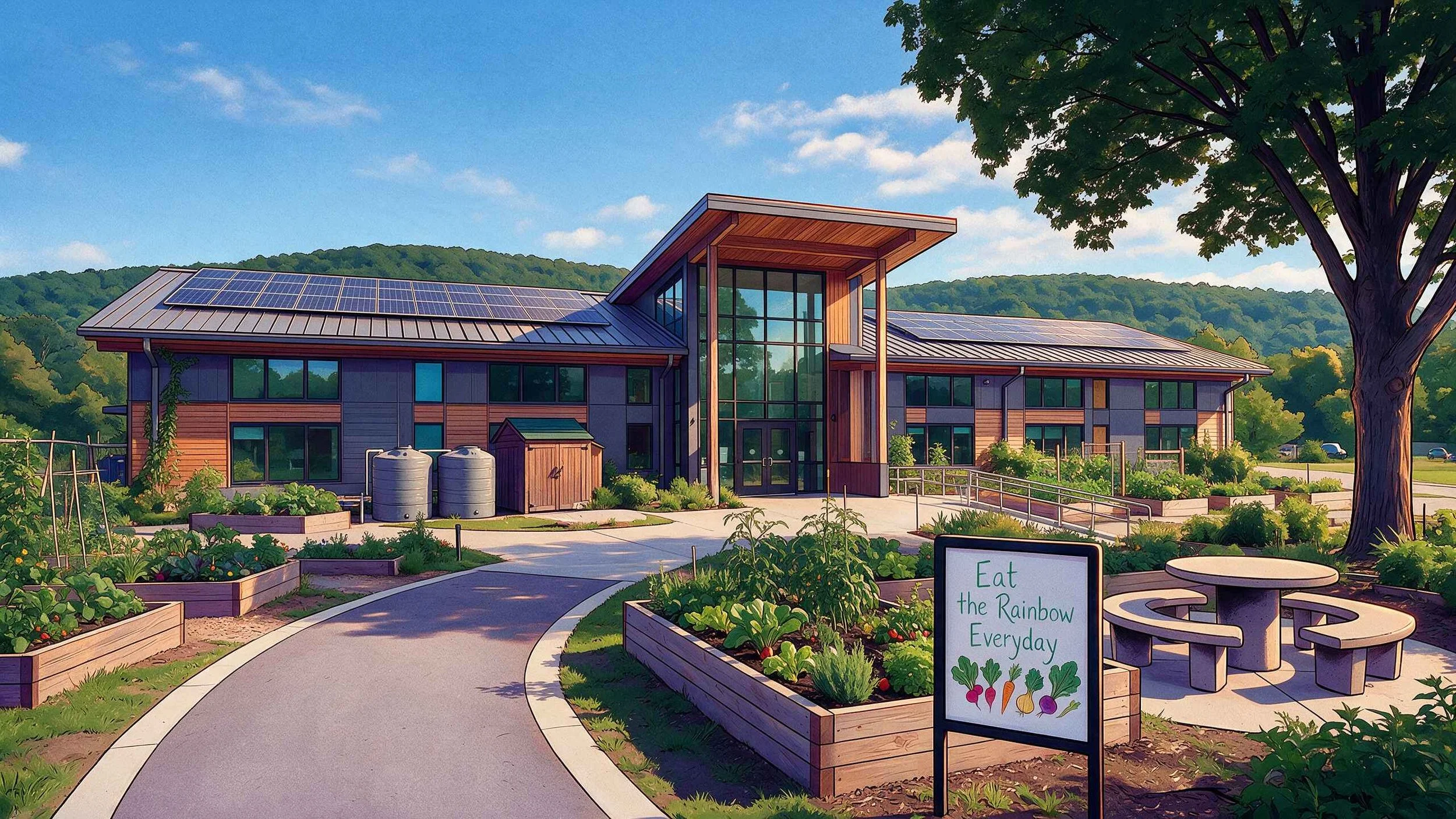
A free readiness tool that helps schools take practical steps towards an energy community and a carbon neutral pathway. Built for schools and their partners in the UK, Europe and Türkiye, it helps school leaders, teachers, learners and community partners score what their school has actually done, not what it knows. It adjusts its guidance to the school's region and the age of its learners.
A ten-step blueprint runs from the first governing body decision to a verified public claim, across nine checkpoints and 56 questions. These cover governance and building ownership, energy baselines and fuel use, future pathways, buildings, energy communities, travel, food and waste, curriculum and reporting. A question only counts as done once the school records its evidence. Every question links to the UNESCO Green School Quality Standard, including all four of its essential actions, and to 20 UN Sustainable Development Goal targets marked as direct or supporting. It also links to the 12 GreenComp competences, each of which opens to show where it is used. Regional guidance sets out building rules, permissions for rooftop solar, legal routes to an energy community and rules on environmental claims. A Support tab lists partner networks and funding routes for each region. Intergenerational fairness, the Education for Climate Coalition's 2026 priority, runs through the questions. An action plan names a member of staff responsible and a learner lead for each step, with a deadline, the resources needed and a curriculum link. Eighteen one-page lessons for ages 5 to 11 and 11 to 18, with teacher's and student's notes, support every checkpoint.
Every rule and figure traces to named sources, including UNESCO, the EU's GreenComp framework, EU energy and consumer law, the European Investment Bank, REScoop.eu, the UK's Competition and Markets Authority and Great British Energy, and Türkiye's Energy Market Regulatory Authority, Ministry of National Education, Official Gazette and Advertising Board. Regional guidance was last checked on 27 September 2026. The tool is ready to adapt to your own school, community and budget.
 Select, Classify, Prove

The Intergenerational Fairness Pulse
The EU's first Strategy on Intergenerational Fairness was built from a year of reports, stories, workshops and a panel of 150 randomly selected citizens. This tool condenses that material for teachers: what the Strategy says, what citizens asked for, and seven ways to bring it into a classroom.
Built from the Strategy (March 2026), the Citizens' Panel recommendations (November 2025) and the EU Policy Lab materials, with every item mapped to GreenComp (JRC, 2022) and SDG targets. Checked against the sources on 29 September 2026.
Set Up For Your Class
Two choices tailor the tool. The age of your learners changes the discussion questions and activity adaptations throughout. Your role suggests a first move.
Which Learners Will Take Part?
What Is Your Role?
What This Tool Brings Together
The Strategy
Adopted by the European Commission on 5 March 2026. It sets out an Intergenerational Contract in three parts: Fair Policymaking, Fair Opportunities and Fair Places, with actions the Commission will take.
European Commission, Strategy on Intergenerational Fairness, 2026.
The Citizens' Panel
150 randomly selected citizens from all 27 Member States, from teenagers to people in their eighties, met over three weekends between September and November 2025 and delivered 24 recommendations.
European Citizens' Panel, Final Recommendations, 16 November 2025.
The Co-Creation Materials
The EU Policy Lab ran scoping, visioning, ideation and co-creation phases, producing stories of the future, an objects booklet and a pilot Intergenerational Council. Many of their methods work as lessons.
EU Policy Lab and JRC, 2025 to 2026.
Why GreenComp And The SDGs
GreenComp names Supporting Fairness (1.2) as a sustainability competence: fairness for people now and people to come. Every recommendation, activity and part of the Strategy in this tool is tagged with the competences it builds and the SDG targets it relates to, so fairness work can sit inside existing sustainability and citizenship planning. Select any chip to see the links.
Teacher's And Student's Notes
Two-page guides for running the tool with a class. Both are also on the Pack tab.
Terms Used In This Tool
General Resources
Teacher’s Notes And Checklist
Student’s Notes and Planner
Energy Community Lesson Pack
Lessons 1-2 Worksheets
1 - Governance And Ownership (5-11)
1 - Governance And Ownership (11-18)
2 - Boundary And Baseline (5-11)
2 - Boundary And Baseline (11-18)
Lessons 3-4 Worksheets
3 - Futures Pathway (5-11)
3 - Futures Pathway (5-11)
4 - Buildings & Energy Efficiency (5-11)
4 - Buildings & Energy Efficiency (11-18)
Lessons 5-6 Worksheets
5 - Energy Community Route (5-11)
5 - Energy Community Route (11-18)
6 - School Travel (5-11)
6 - School Travel (11-18)
Lessons 7-8 Worksheets
7 - Food Waste And Procurement (5-11)
7 - Food Waste And Procurement (11-18)
8 - Curriculum And Community (5-11)
8 - Curriculum And Community 11-18)
Lessons 9 Worksheets
9 - Verify, Report And Claim (5-11)
9 - Verify, Report And Claim (11-18)