Overview
Clean energy, safe water, resilient infrastructure, and a stable climate are engineering problems, data problems, and design problems waiting for people trained to solve them. The Sustainable Development Goals Toolkit: STEM Edition (Core Pack) is built on that conviction, connecting the global goals to the technical disciplines that can actually deliver them and giving science and engineering students a way to move from theory toward working solutions.
This Core Pack concentrates on the ten goals where STEM has the most to contribute: Good Health and Well-Being, Quality Education, Clean Water and Sanitation, Affordable and Clean Energy, Industry, Innovation and Infrastructure, Sustainable Cities and Communities, Responsible Consumption and Production, Climate Action, Life Below Water, and Life on Land. Each is tied to its official UN targets and rewritten in clear language, then linked to the experiments, models, and design challenges that bring the science to life. The pack is made for laboratories, classrooms, cross-curricular STEM projects, and science fairs, and it deliberately surfaces the technical constraints and trade-offs that every real engineering solution carries.
SDG 13, Climate Action, shows how a unit works. It establishes climate change as a present reality grounded in physical science, then moves through targets and key reframes, learning objectives covering tipping points and feedback loops, and Curriculum Connections that run across environmental science, disaster resilience, green careers and innovation, and the data behind accountability. From there it carries students through "The Big Questions," analysis of who and what are affected, what is being done, the consequences of inaction, a reflection and action project suited to a build or investigation, curated resources, real-world case studies, an assessment guide, assessment tools, and a rubric snapshot. All ten goals follow the same structure, giving teachers a dependable framework and students an evidence-based route from question to tested solution.
A unified A to Z glossary supports the technical vocabulary across every goal, defining each term, showing where it appears in the toolkit, and explaining why it matters. With case studies drawn from publicly reported initiatives and assessment built into every unit, the pack helps STEM educators turn the goals into projects students can design, model, and defend.
This toolkit is the work of David Hudson, creator of the 169to1® Official SDG Toolkit Collection and founder of Hudson Consultancy Online. Hudson has spent years on a single, demanding undertaking: taking all 169 United Nations SDG targets and rebuilding them into a structured, sector-ready system that learners and organisations can actually use. Refined across three editions since 2017, his work now spans an entire collection written for distinct audiences, including STEM, Education, Schools, Youth Ambassadors, NGO Teams, Business, ESG, and SME Business. Where most sustainability writing stops at principles, Hudson translates the full framework into action, target by target, with a consistency and depth that few resources in the field can match. The result is a body of work built to move people from intention to delivery.
Product Details
Title: The Sustainable Development Goals Toolkit: STEM Edition (Core Pack)
Author: David Hudson
Publisher: Hudson Consultancy Online (169to1®)
Series: 169to1® Official SDG Toolkit Collection
Edition: Third Edition, 2026 (Commercial Edition)
Format: eBook (PDF / digital download)
Approx. Length: ~332 pages
Coverage: 10 STEM-relevant SDGs (3, 4, 6, 7, 9, 11, 12, 13, 14, 15), linked to technical disciplines
Audience: Science and engineering teachers, STEM students, lab and project leads, and science fair coordinators
Key Features: Per-goal targets and key reframes, learning objectives, curriculum connections, "Big Questions," reflection and action projects, case studies, assessment guides, assessment tools, rubric snapshots, and a full A to Z glossary
Language: English
Edition History: First Edition 2017, Second Edition 2025, Third Edition 2026
Overview
Clean energy, safe water, resilient infrastructure, and a stable climate are engineering problems, data problems, and design problems waiting for people trained to solve them. The Sustainable Development Goals Toolkit: STEM Edition (Core Pack) is built on that conviction, connecting the global goals to the technical disciplines that can actually deliver them and giving science and engineering students a way to move from theory toward working solutions.
This Core Pack concentrates on the ten goals where STEM has the most to contribute: Good Health and Well-Being, Quality Education, Clean Water and Sanitation, Affordable and Clean Energy, Industry, Innovation and Infrastructure, Sustainable Cities and Communities, Responsible Consumption and Production, Climate Action, Life Below Water, and Life on Land. Each is tied to its official UN targets and rewritten in clear language, then linked to the experiments, models, and design challenges that bring the science to life. The pack is made for laboratories, classrooms, cross-curricular STEM projects, and science fairs, and it deliberately surfaces the technical constraints and trade-offs that every real engineering solution carries.
SDG 13, Climate Action, shows how a unit works. It establishes climate change as a present reality grounded in physical science, then moves through targets and key reframes, learning objectives covering tipping points and feedback loops, and Curriculum Connections that run across environmental science, disaster resilience, green careers and innovation, and the data behind accountability. From there it carries students through "The Big Questions," analysis of who and what are affected, what is being done, the consequences of inaction, a reflection and action project suited to a build or investigation, curated resources, real-world case studies, an assessment guide, assessment tools, and a rubric snapshot. All ten goals follow the same structure, giving teachers a dependable framework and students an evidence-based route from question to tested solution.
A unified A to Z glossary supports the technical vocabulary across every goal, defining each term, showing where it appears in the toolkit, and explaining why it matters. With case studies drawn from publicly reported initiatives and assessment built into every unit, the pack helps STEM educators turn the goals into projects students can design, model, and defend.
This toolkit is the work of David Hudson, creator of the 169to1® Official SDG Toolkit Collection and founder of Hudson Consultancy Online. Hudson has spent years on a single, demanding undertaking: taking all 169 United Nations SDG targets and rebuilding them into a structured, sector-ready system that learners and organisations can actually use. Refined across three editions since 2017, his work now spans an entire collection written for distinct audiences, including STEM, Education, Schools, Youth Ambassadors, NGO Teams, Business, ESG, and SME Business. Where most sustainability writing stops at principles, Hudson translates the full framework into action, target by target, with a consistency and depth that few resources in the field can match. The result is a body of work built to move people from intention to delivery.
Product Details
Title: The Sustainable Development Goals Toolkit: STEM Edition (Core Pack)
Author: David Hudson
Publisher: Hudson Consultancy Online (169to1®)
Series: 169to1® Official SDG Toolkit Collection
Edition: Third Edition, 2026 (Commercial Edition)
Format: eBook (PDF / digital download)
Approx. Length: ~332 pages
Coverage: 10 STEM-relevant SDGs (3, 4, 6, 7, 9, 11, 12, 13, 14, 15), linked to technical disciplines
Audience: Science and engineering teachers, STEM students, lab and project leads, and science fair coordinators
Key Features: Per-goal targets and key reframes, learning objectives, curriculum connections, "Big Questions," reflection and action projects, case studies, assessment guides, assessment tools, rubric snapshots, and a full A to Z glossary
Language: English
Edition History: First Edition 2017, Second Edition 2025, Third Edition 2026

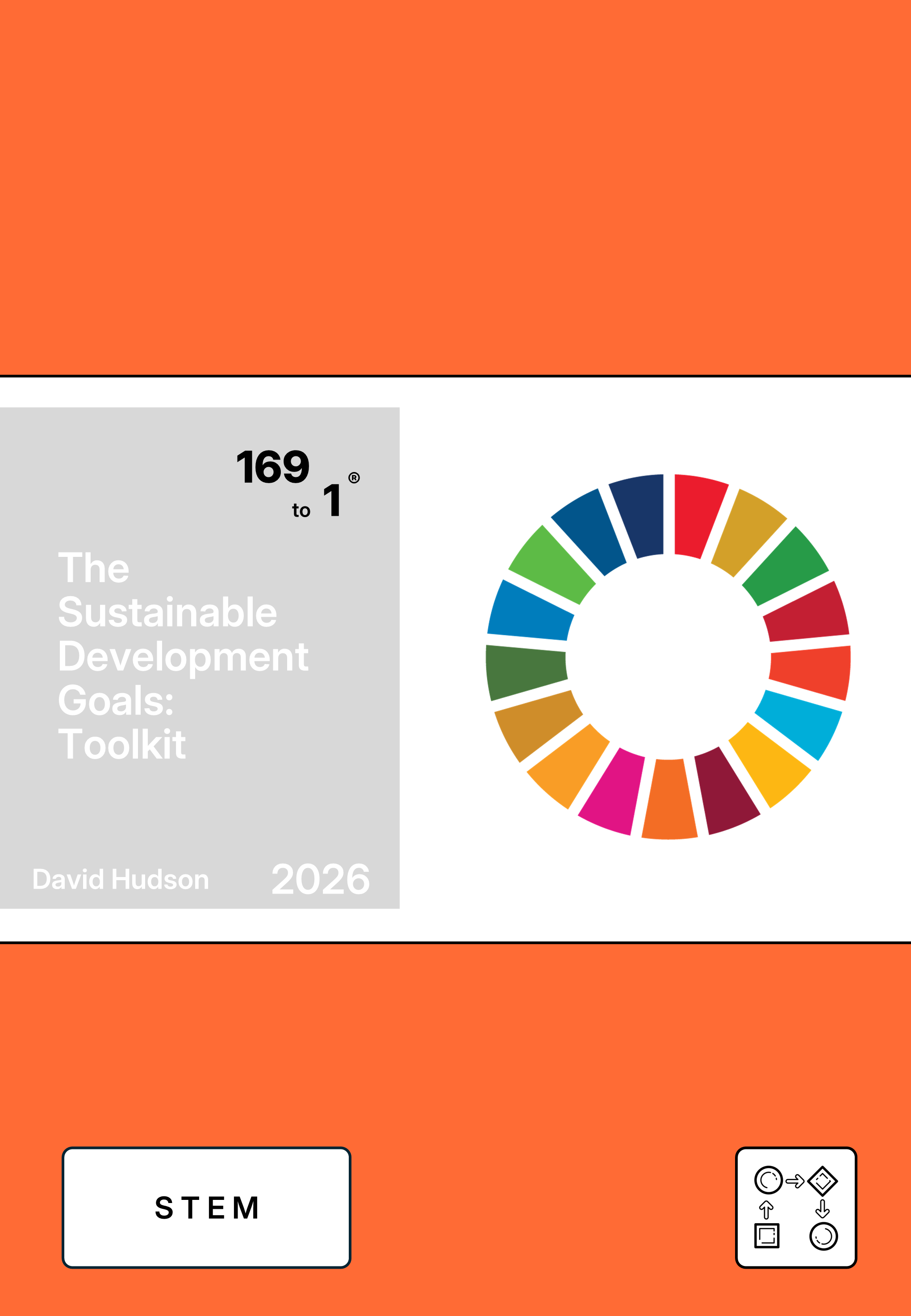 Image 1 of 27
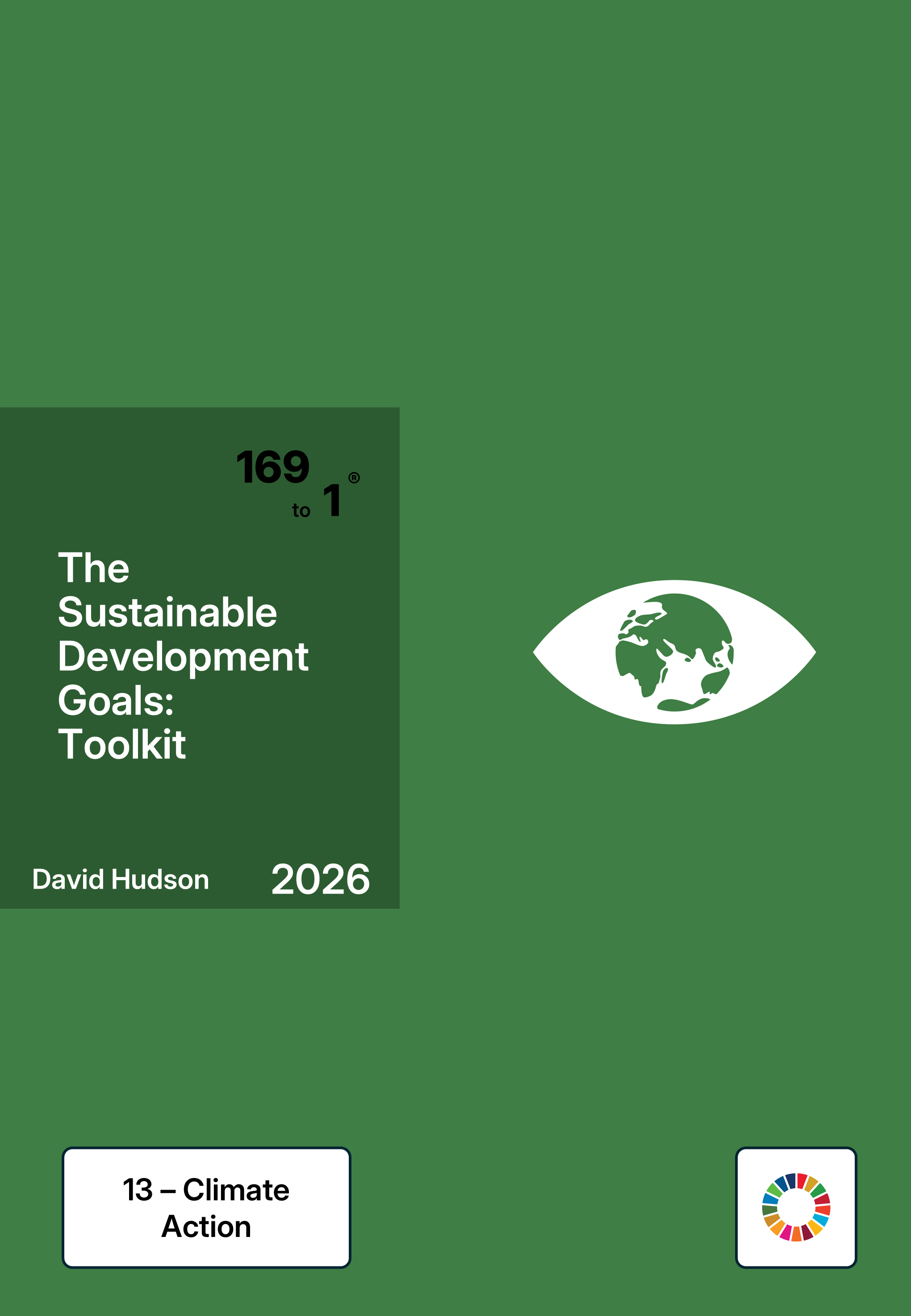 Image 2 of 27
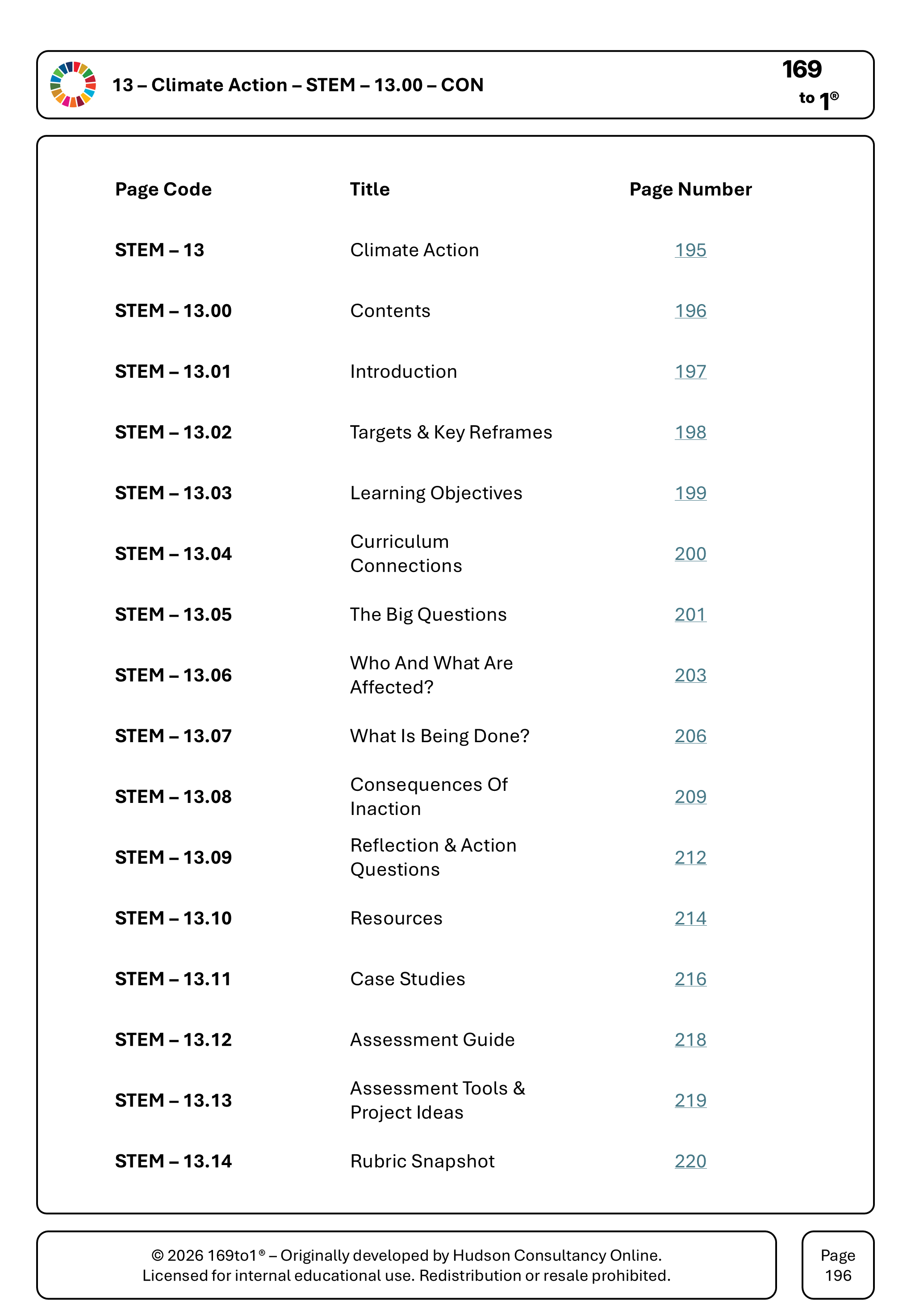 Image 3 of 27
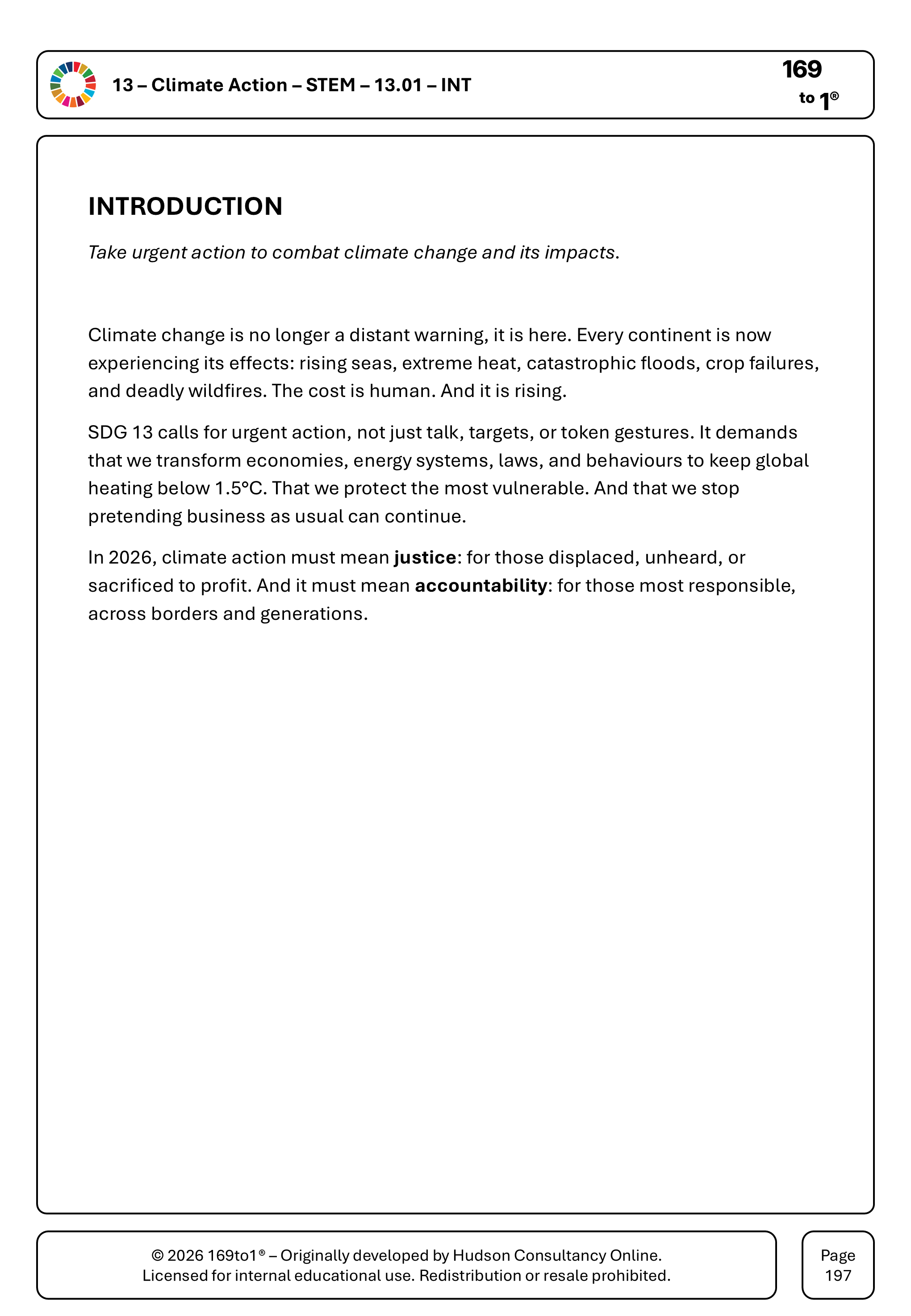 Image 4 of 27
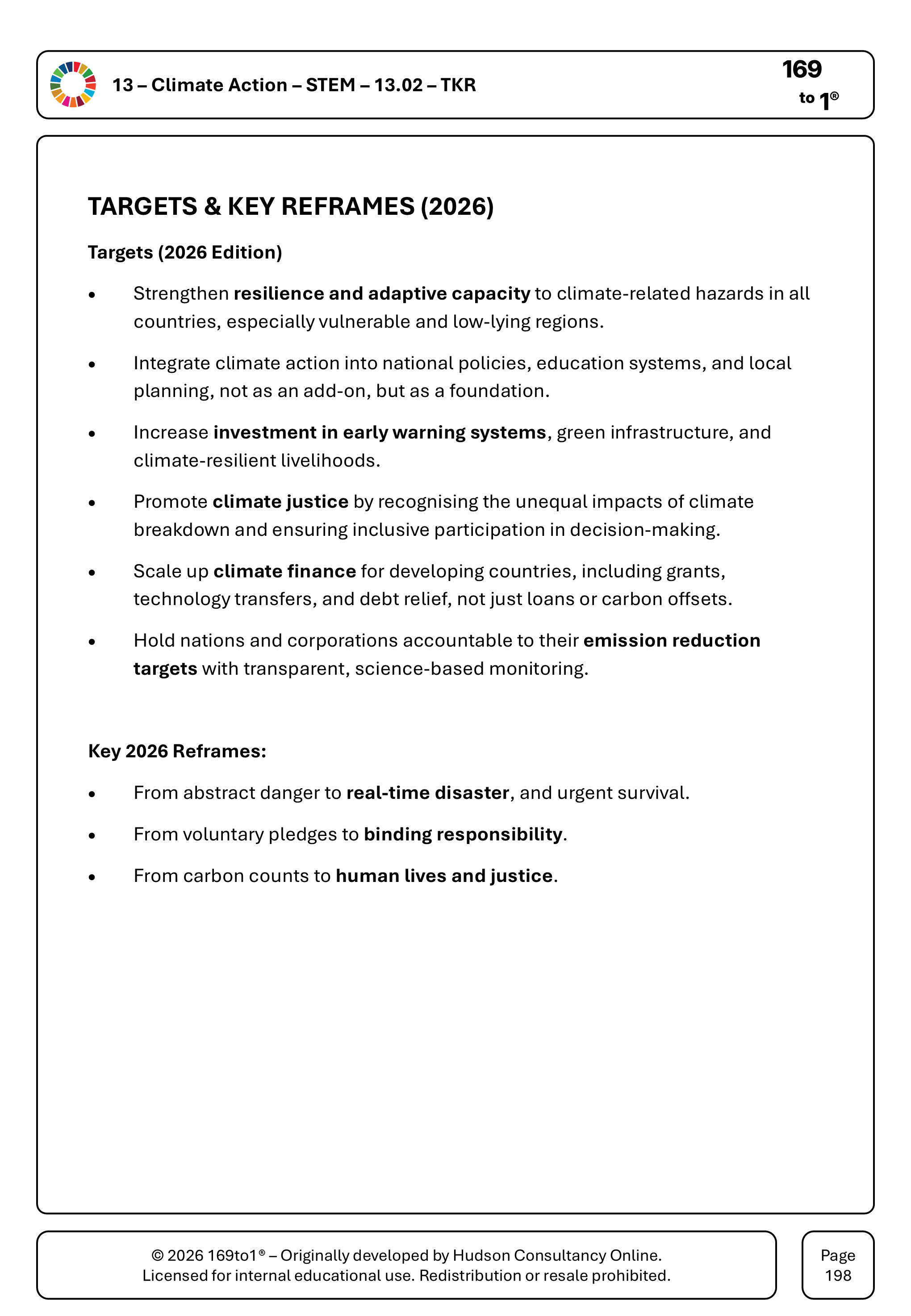 Image 5 of 27
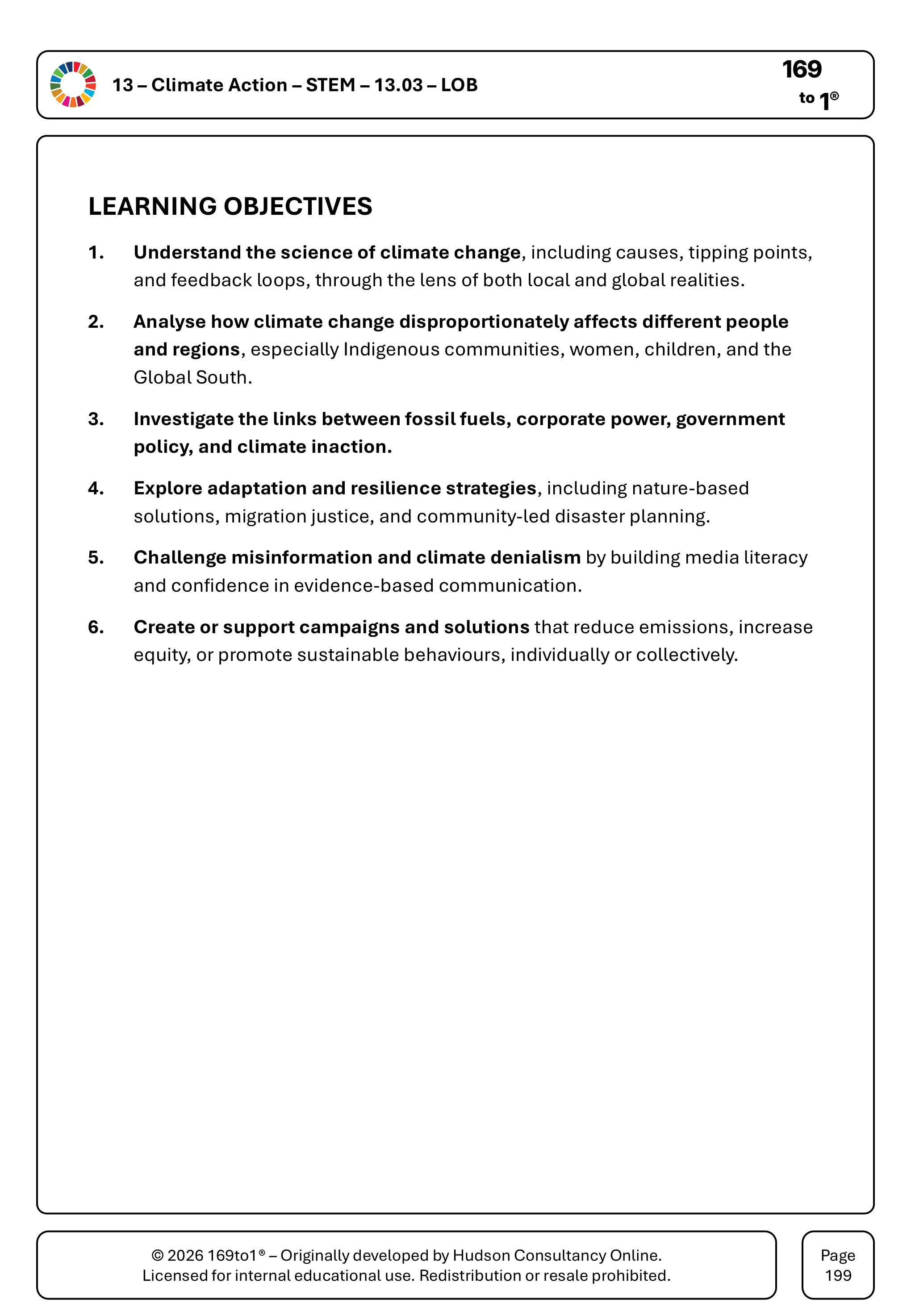 Image 6 of 27
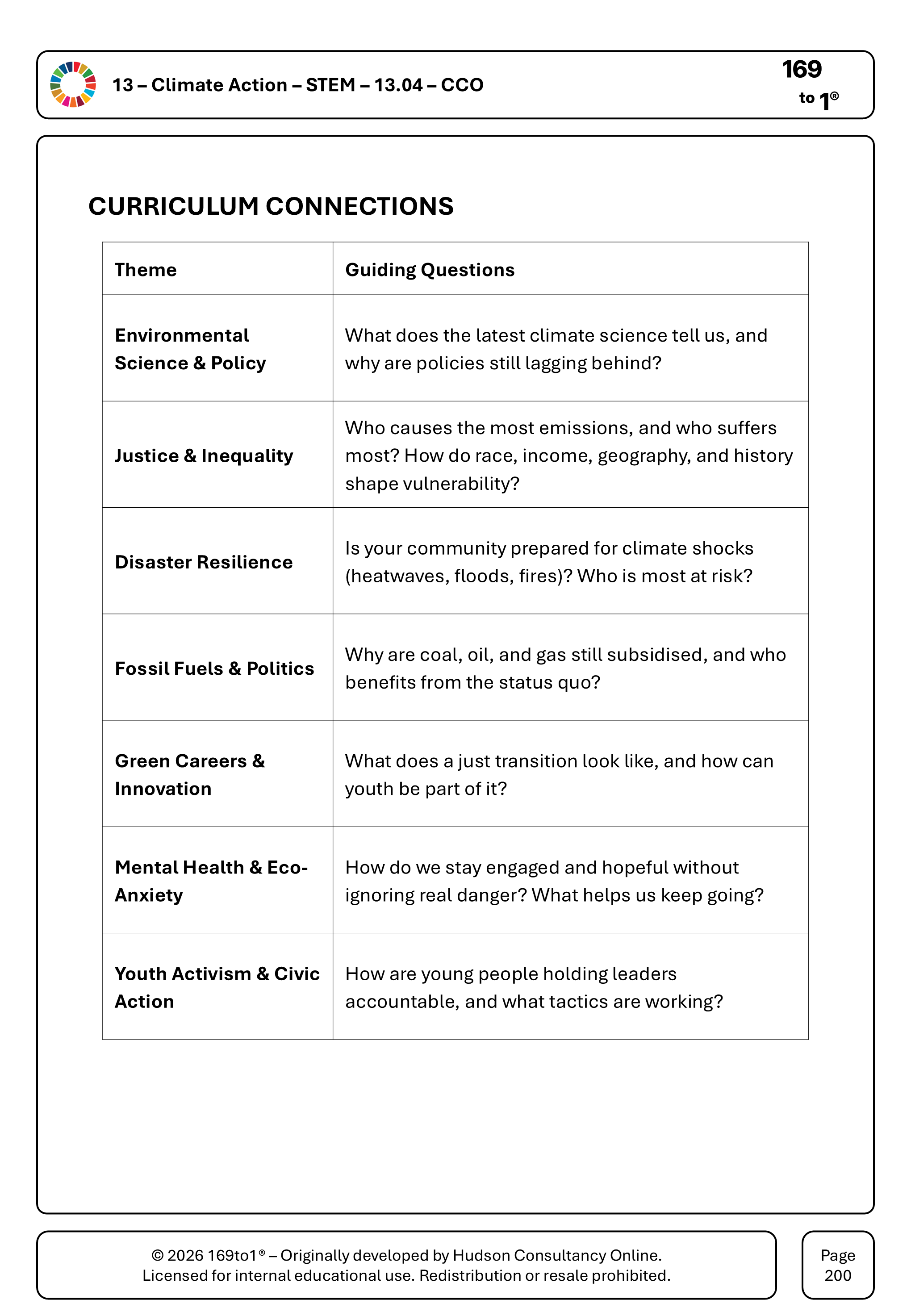 Image 7 of 27
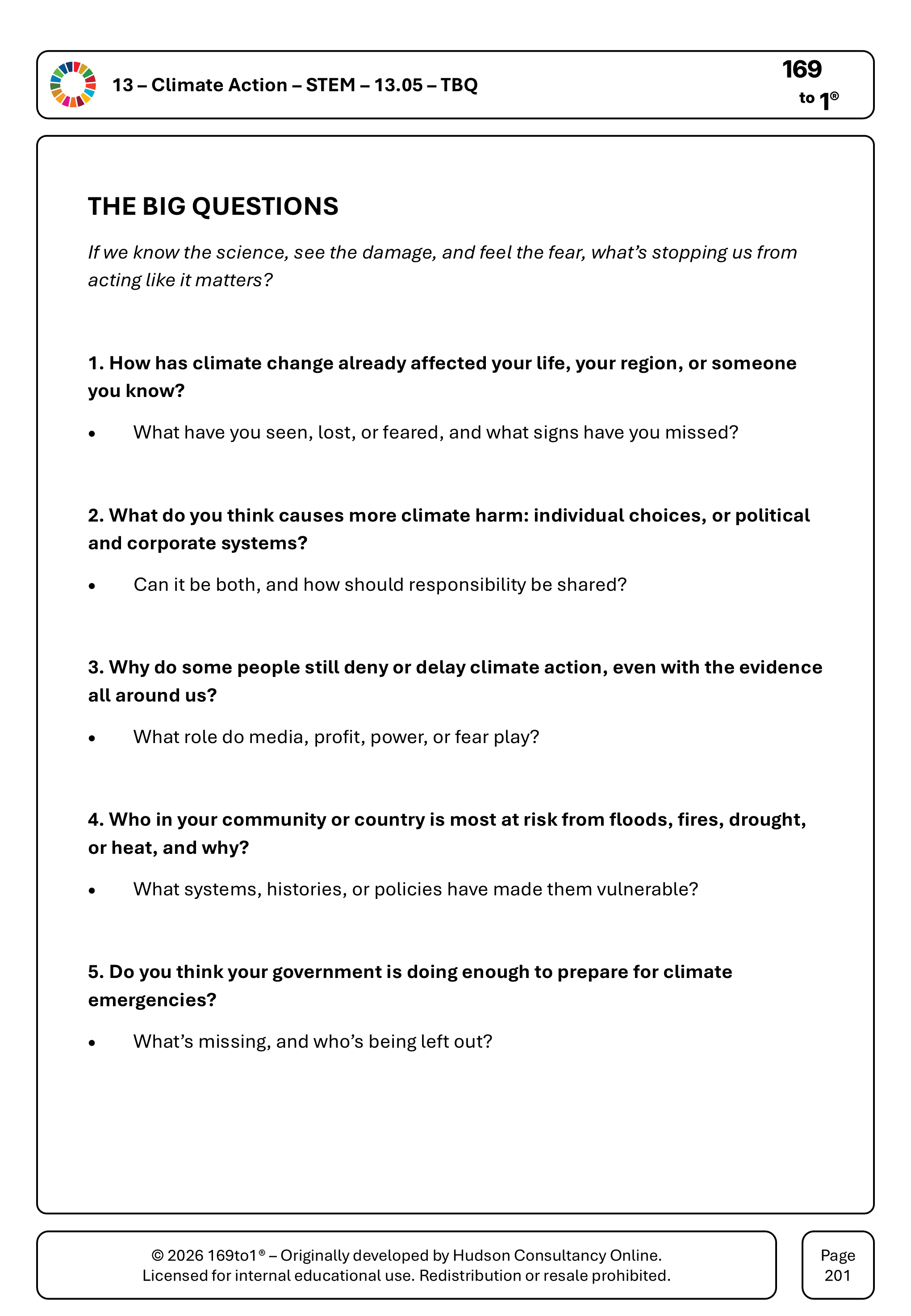 Image 8 of 27
 Image 9 of 27
 Image 10 of 27
 Image 11 of 27
 Image 12 of 27
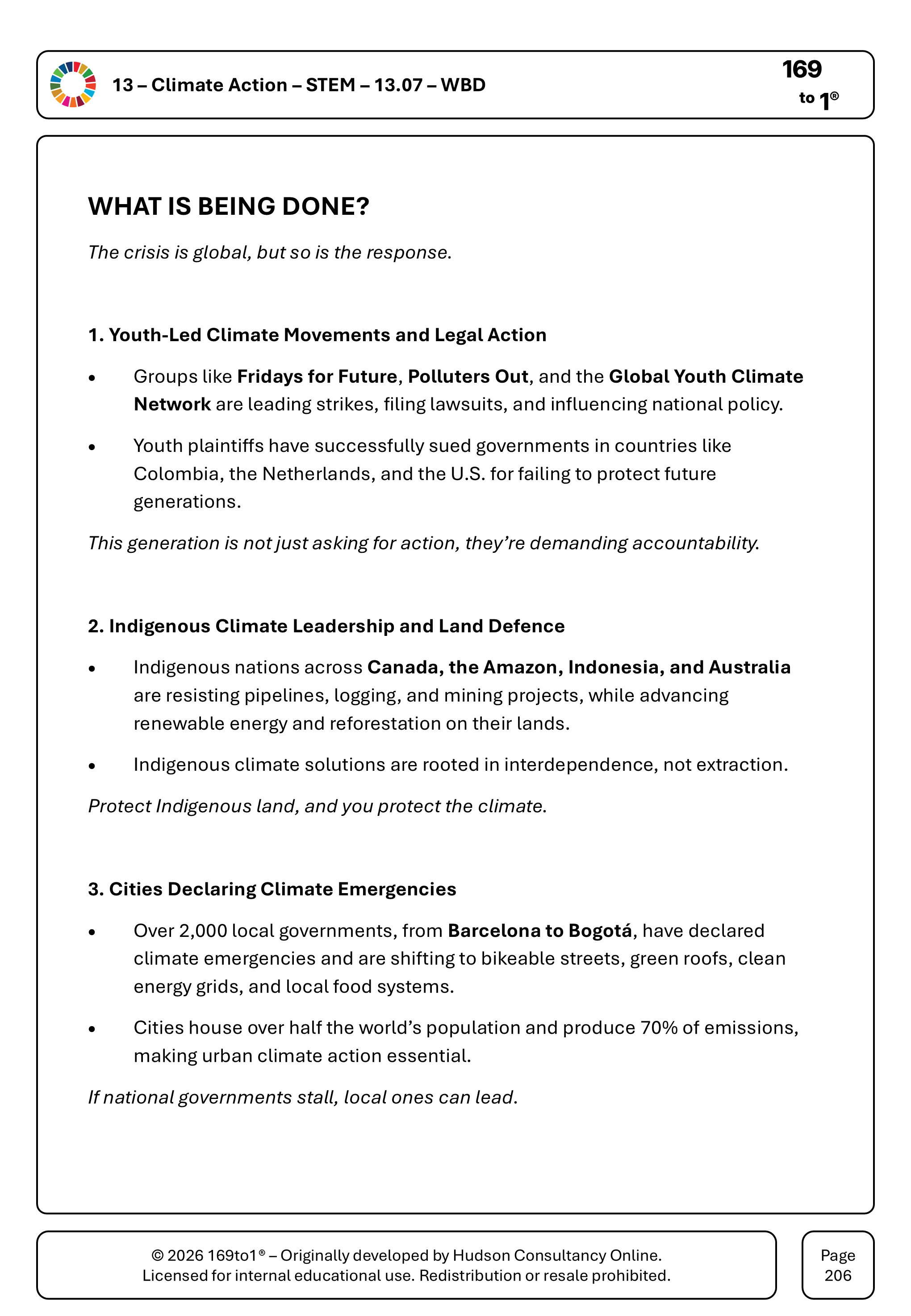 Image 13 of 27
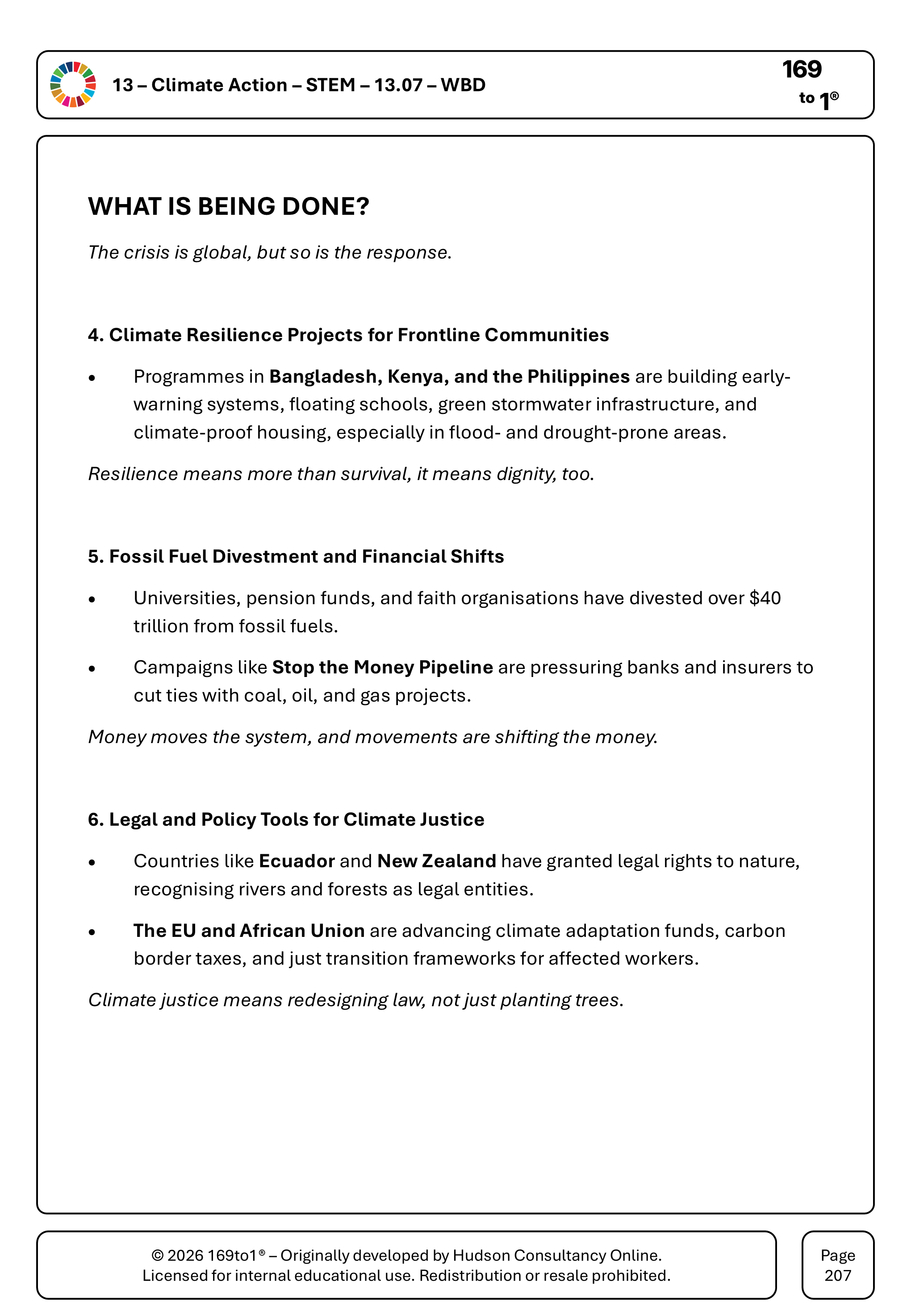 Image 14 of 27
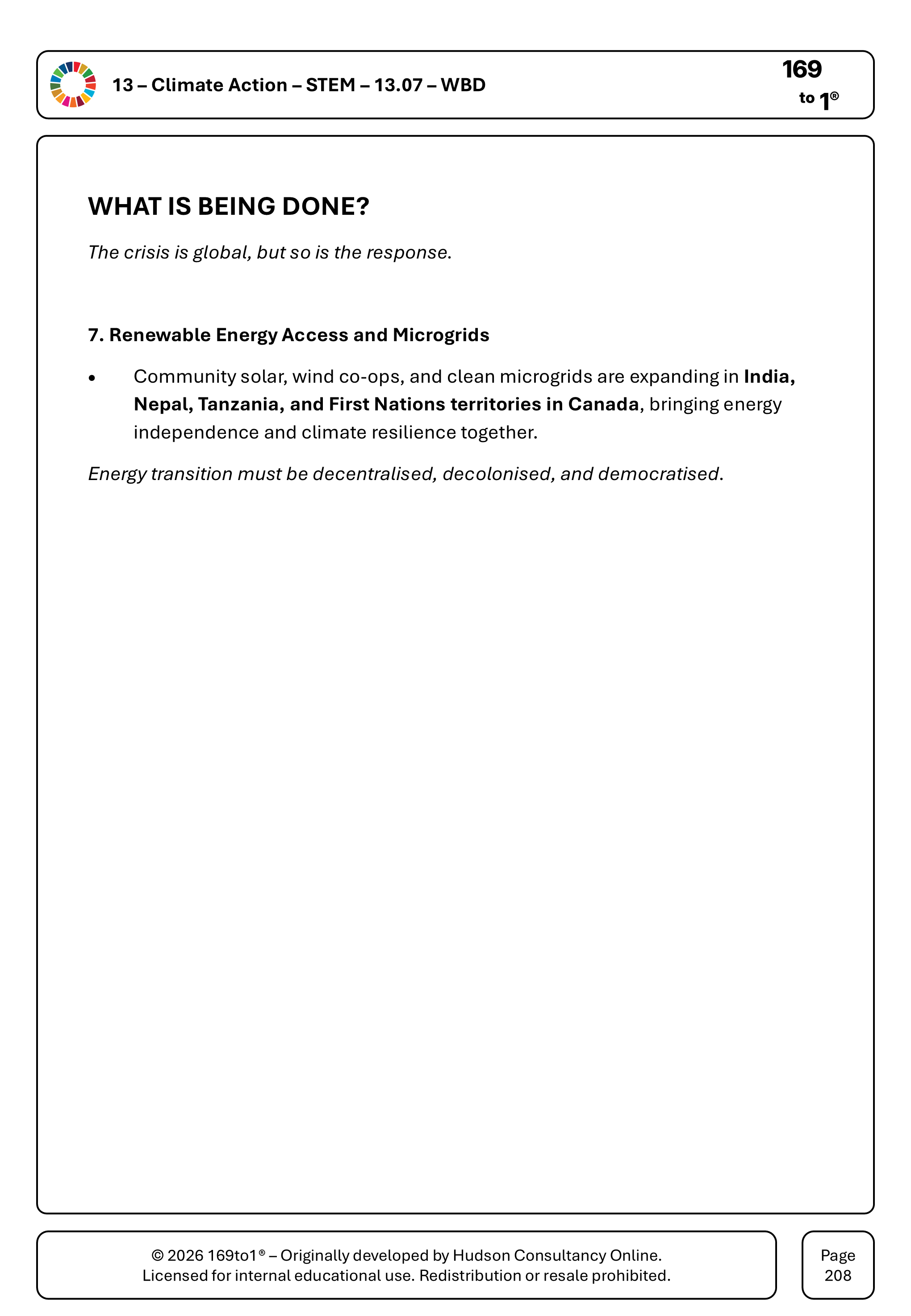 Image 15 of 27
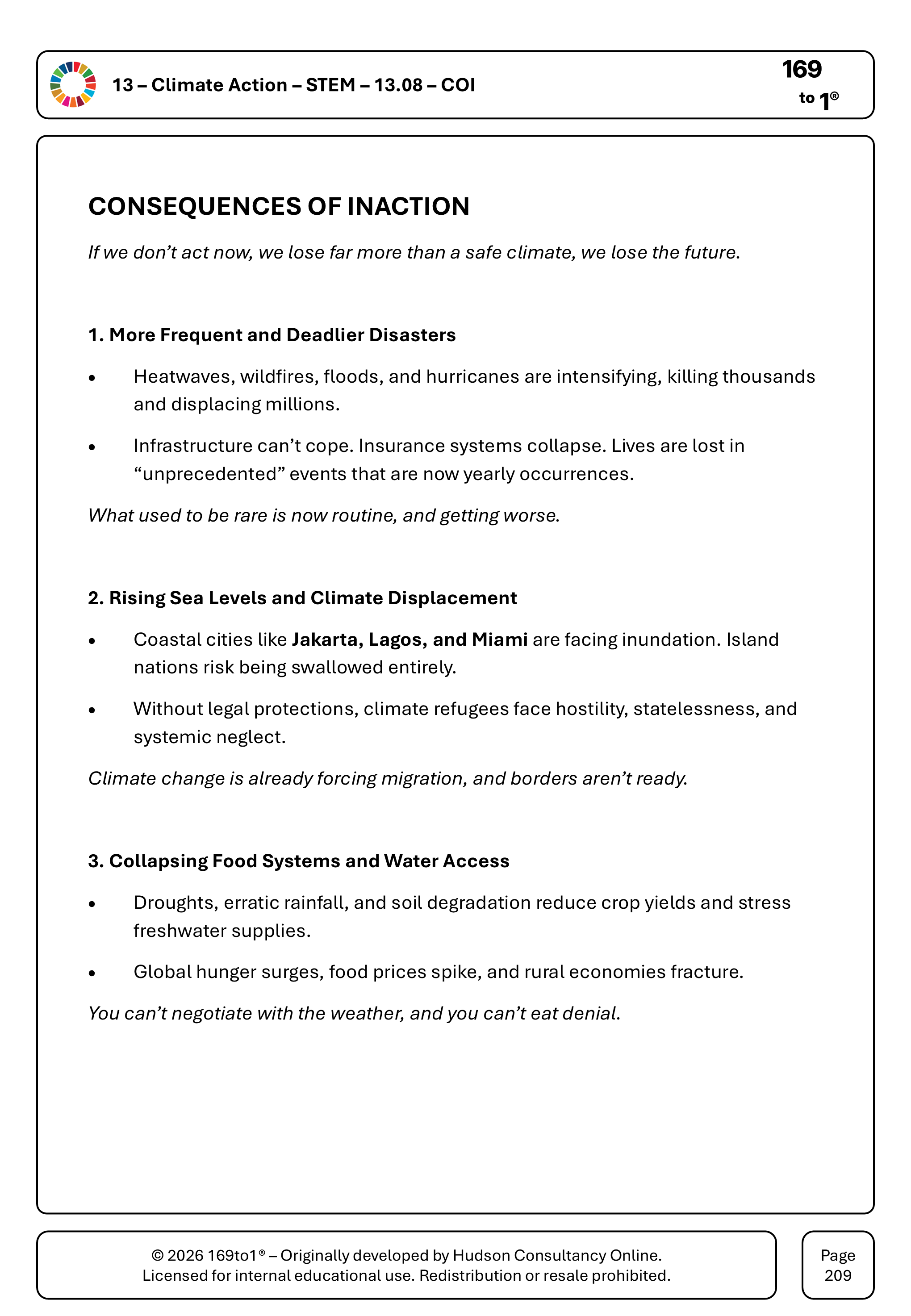 Image 16 of 27
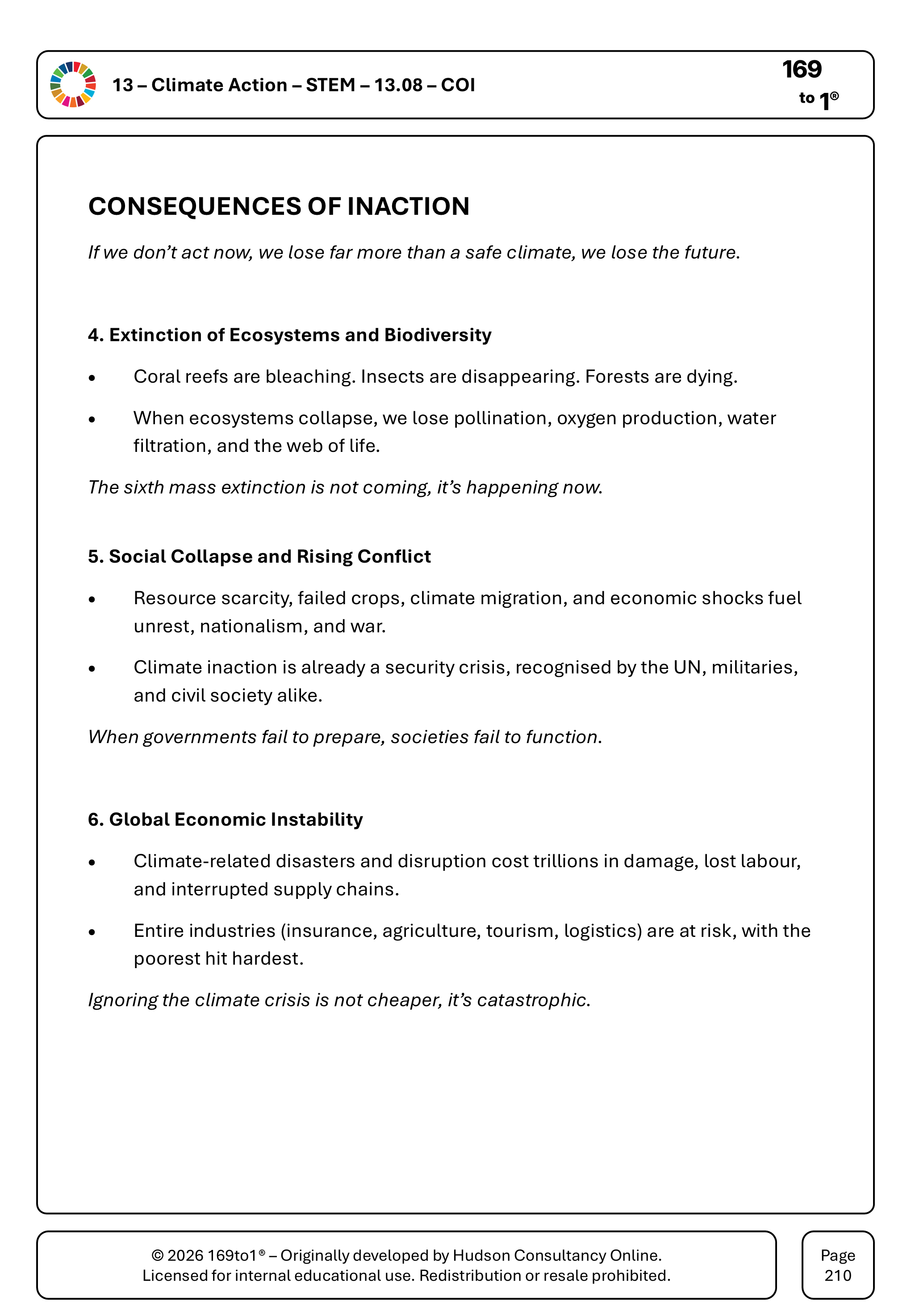 Image 17 of 27
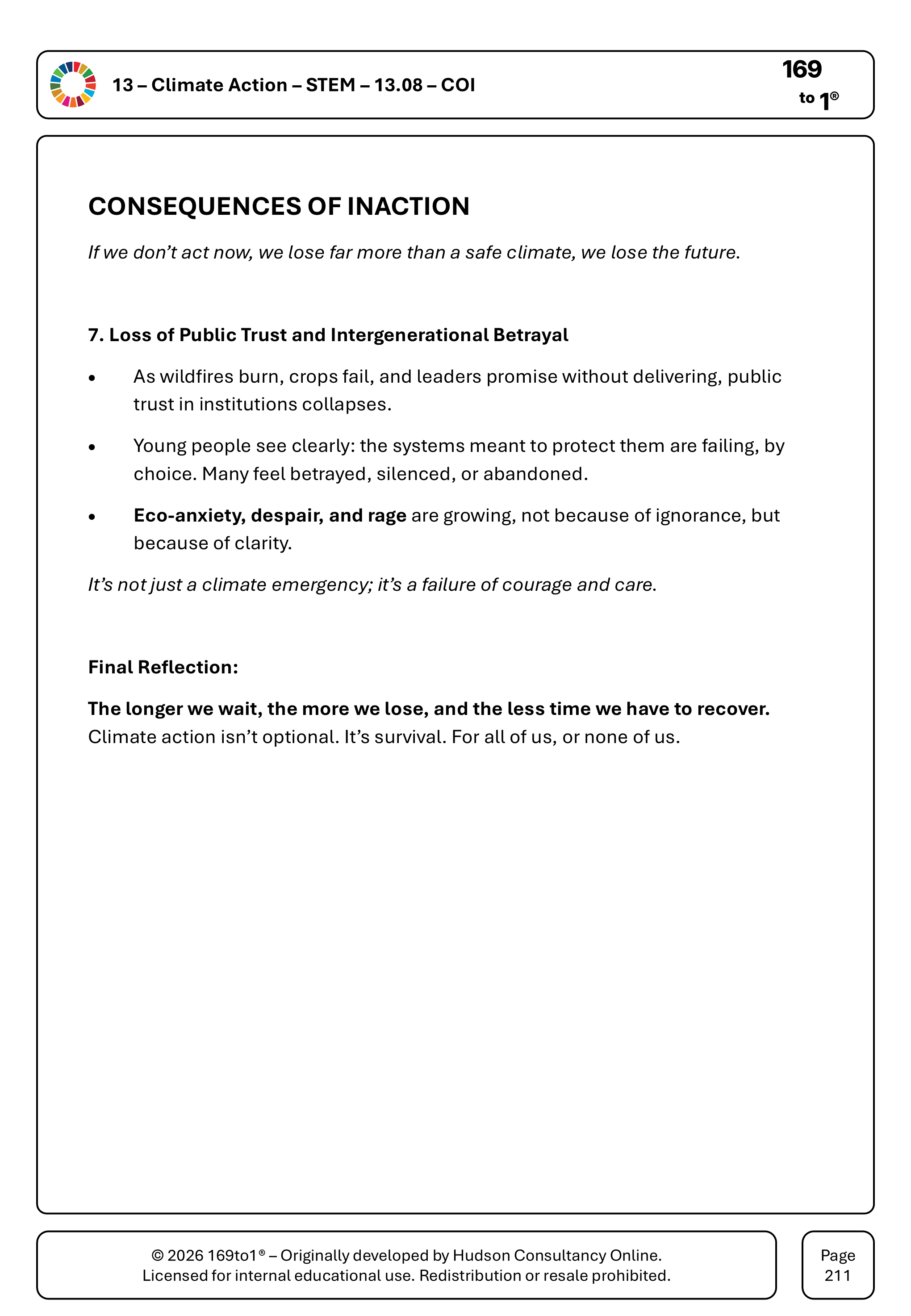 Image 18 of 27
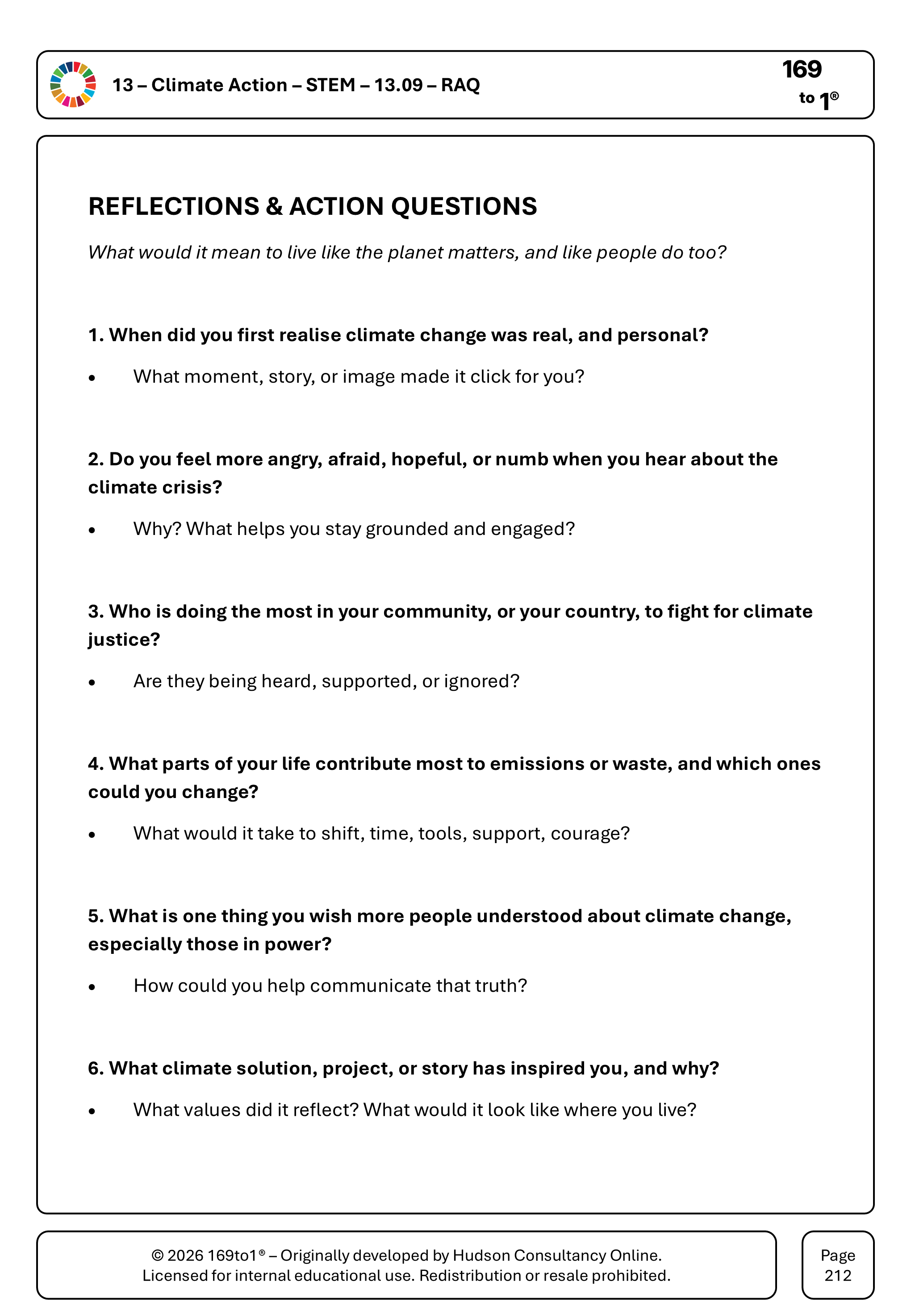 Image 19 of 27
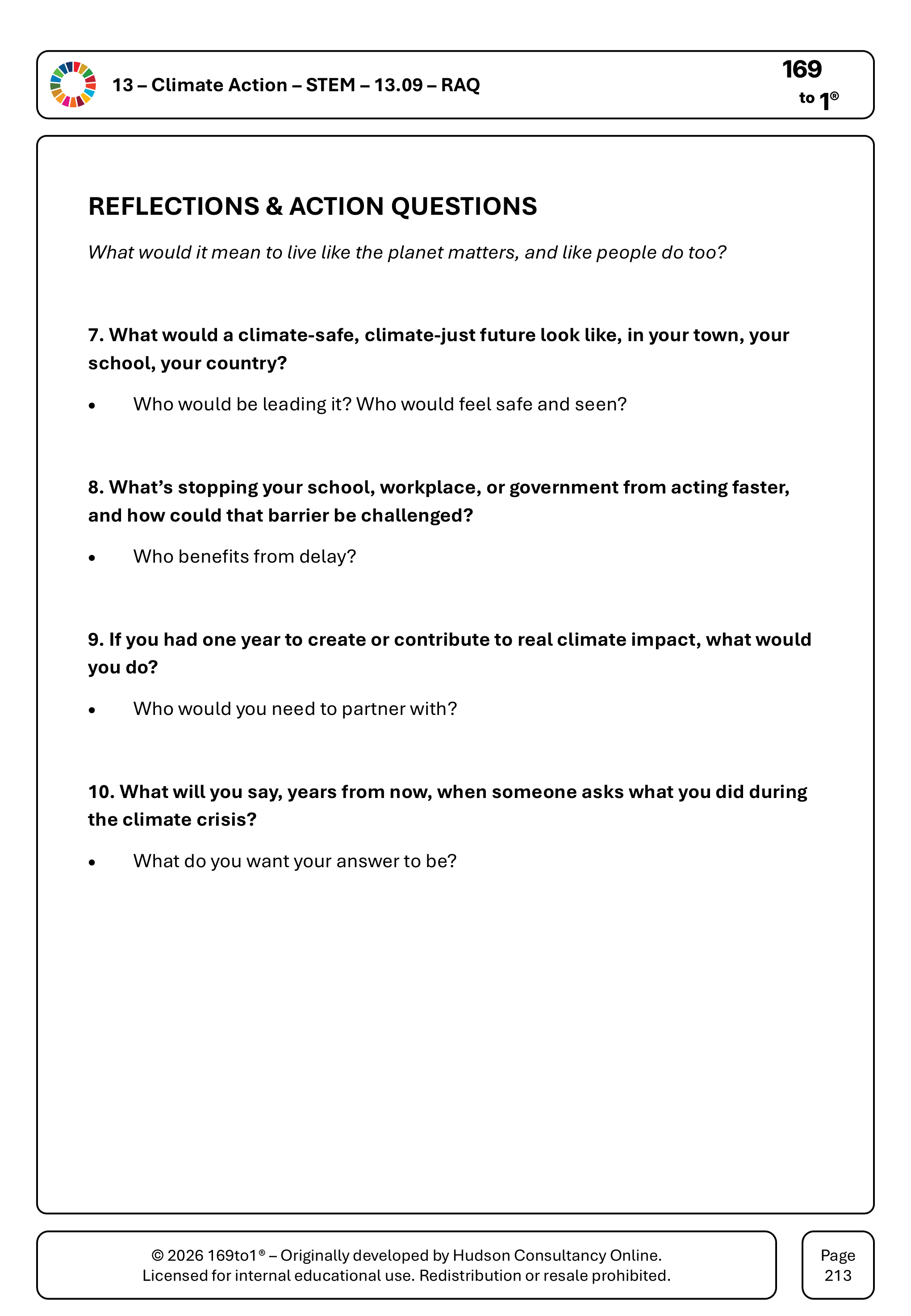 Image 20 of 27
 Image 21 of 27
 Image 22 of 27
 Image 23 of 27
 Image 24 of 27
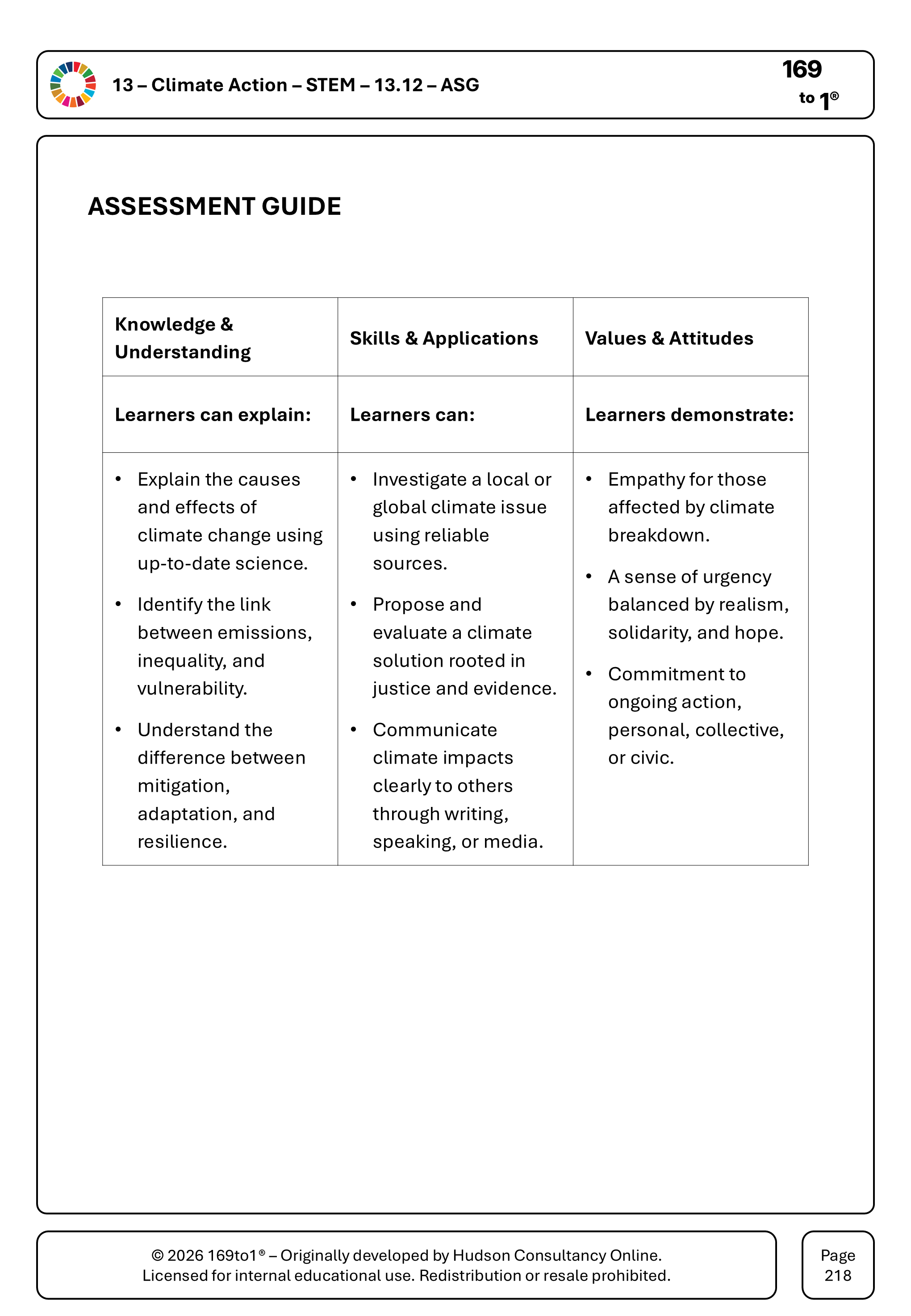 Image 25 of 27
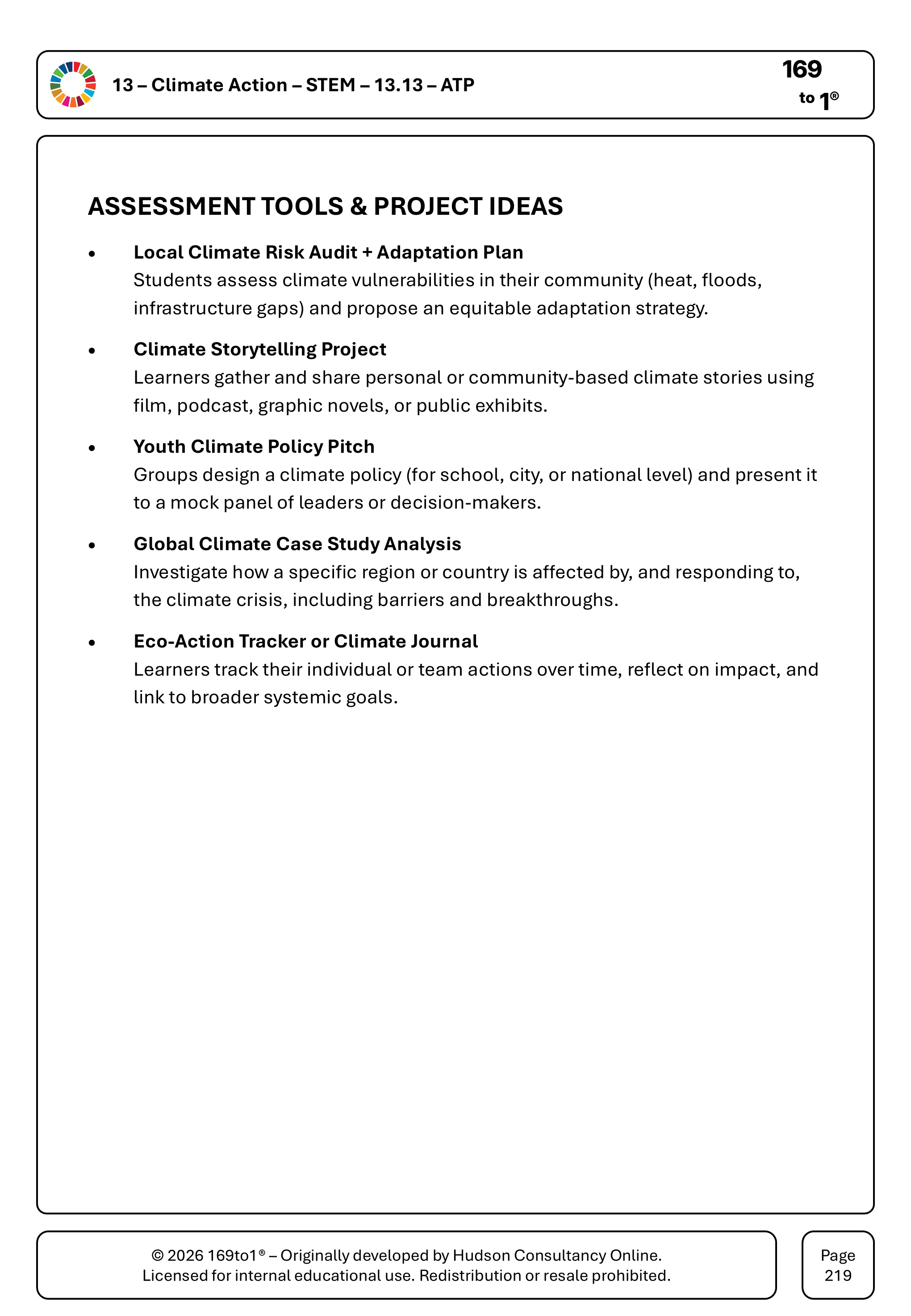 Image 26 of 27
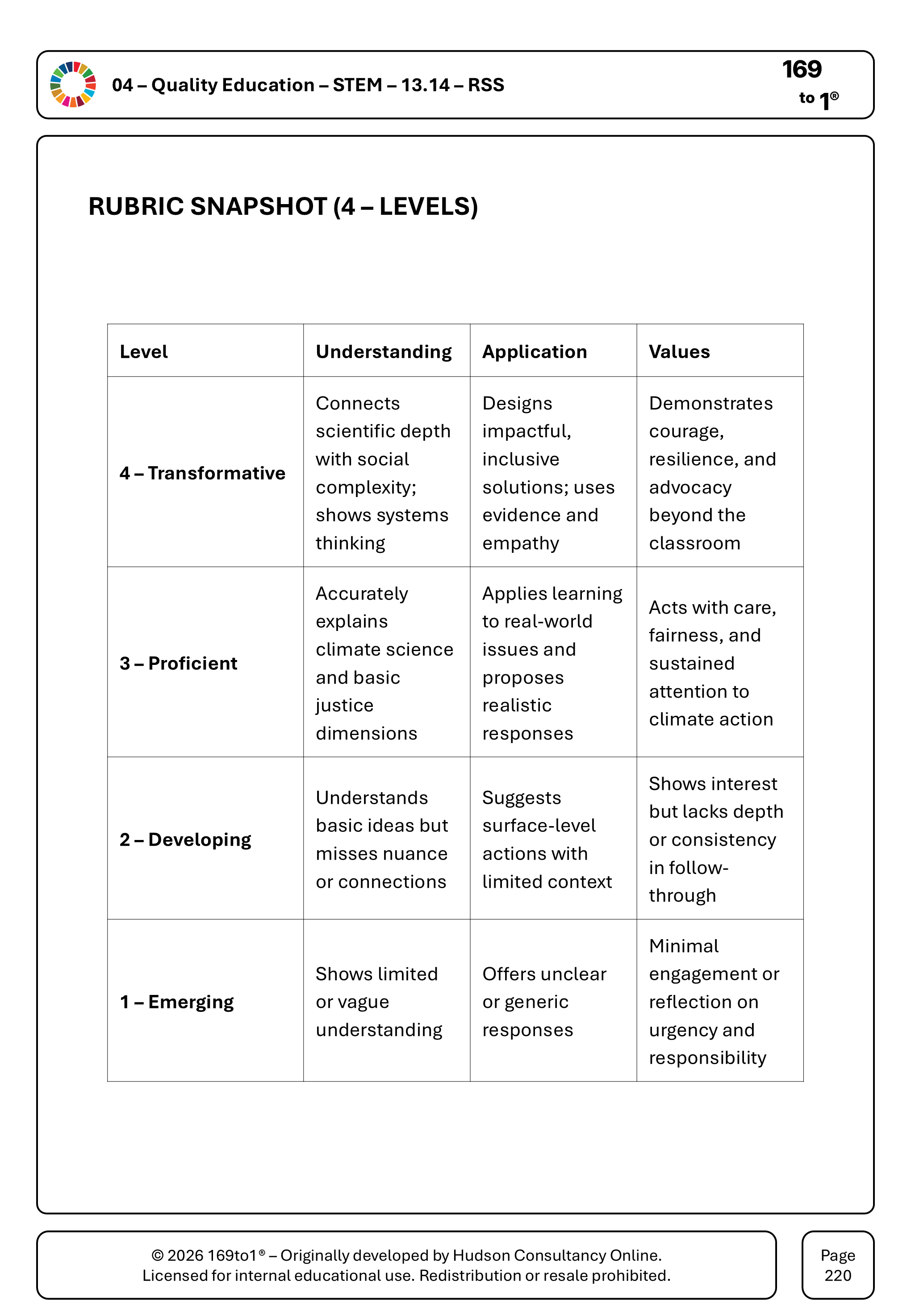 Image 27 of 27